Verified November 21, 2026 by Local Toronto Editorial
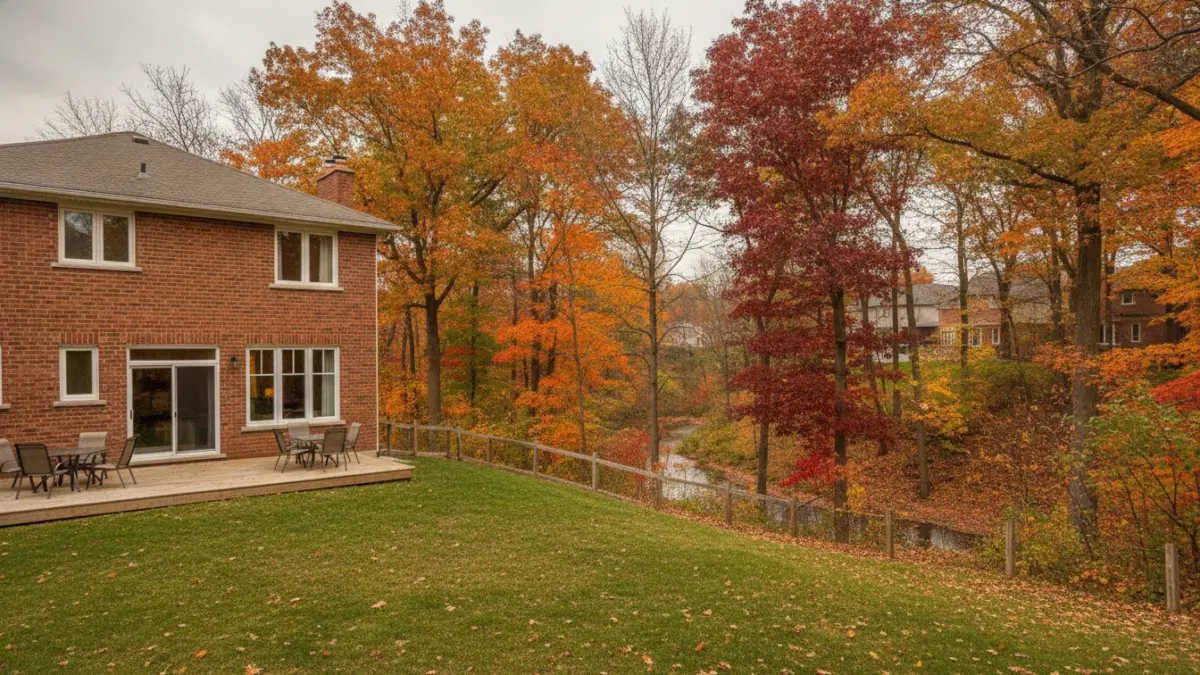
Short answer: A home that backs onto conservation land or a ravine usually comes with a second set of rules. In much of the GTA, the back of the lot sits inside an area regulated by a conservation authority under Ontario Regulation 41/24, and in Toronto it may also fall under the City’s Ravine and Natural Feature Protection By-law. That means many decks, pools, additions, tree removals and grading jobs need a permit before work starts. Before you buy, confirm where the property line is, which rules cover the lot, and whether anything already built in the yard was approved.
Who controls land next to a ravine
Buyers often assume the trees behind the fence belong to “the city” and that their own yard is theirs to change. Both parts can be wrong. Ravine and valley land in the GTA is a mix of City parkland, land owned by a conservation authority such as Toronto and Region Conservation Authority (TRCA) or Credit Valley Conservation (CVC), and private backyards.
Toronto’s own figures show how much private land is involved. About 17% of the city, roughly 11,000 hectares, is protected under the Ravine and Natural Feature Protection By-law. About 60% of that protected land is public and 40% is private, covering about 30,000 private addresses. The City also notes that protection follows natural features and slopes, not lot lines, so a backyard can be covered while the front yard of the same house is not.
In practice, three layers can apply to one lot:
| Layer | Who runs it | What it covers |
|---|---|---|
| Conservation authority regulation | TRCA, CVC, Conservation Halton, Lake Simcoe Region CA and others, under Ontario Regulation 41/24 | Development, site alteration and changes to watercourses in valleys, wetlands, shorelines and other hazard lands plus set allowances |
| Municipal ravine or natural feature rules | City of Toronto (Chapter 658); other cities use zoning, natural heritage policies and tree by-laws | Tree injury or removal, fill, dumping and grade changes in mapped areas |
| Ordinary municipal rules | The local city or town | Building permits, zoning setbacks, fences, pools, private tree by-laws |
For Toronto, the City says TRCA requirements come first in TRCA-regulated areas, and TRCA permission is needed before the City will issue a building permit there.
What a conservation authority regulates
Ontario Regulation 41/24 sets out where development is prohibited without a permit from the local conservation authority. The distances that matter most to GTA homeowners are:
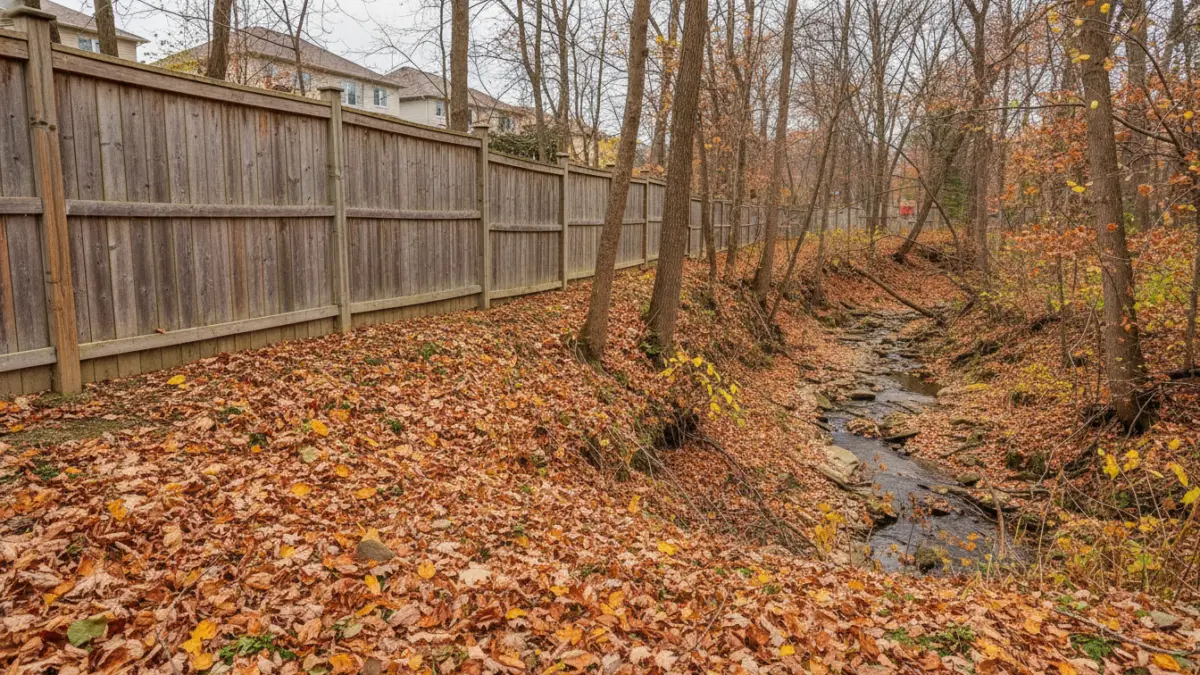
- River or stream valleys: where the valley is clearly visible and the slopes are stable, the regulated area runs from the stable top of bank plus 15 metres, across to the same point on the other side. Where no valley is visible, the regulation adds a 15 metre allowance on each side.
- Wetlands: the wetland itself and the land within 30 metres of it.
- Great Lakes and inland lake shorelines: where a dynamic beach exists, an allowance of 30 metres inland, plus a further 15 metres.
“Development” is broad. It includes building or adding to structures, placing or removing fill, and regrading. If your backyard falls inside one of these areas, a new deck or pool, a retaining wall, or an addition at the back of the house is likely to need a conservation authority permit as well as a building permit.
What is exempt
The regulation lists some small projects that do not need a conservation authority permit, provided they are not in a wetland or watercourse:
| Project | Exempt if |
|---|---|
| Fence | Rail, chain-link or panelled fence with at least 75 mm between panels |
| Shed or other accessory building | Non-habitable, incidental to the main building, 15 square metres or less |
| Deck or patio | Unenclosed, detached, 15 square metres or less, no cantilevering |
| Garage rebuild | Non-habitable garage with no basement, rebuilt within the existing footprint |
| Driveway repairs | Maintenance and repair of an existing driveway outside a wetland |
An exemption from the conservation authority does not mean no permit at all. City building permits, zoning rules and, in Toronto, the ravine by-law can still apply.
If you are not sure whether a lot is regulated, the conservation authority map tools and property inquiry letters are explained step by step in our guide to checking GTA floodplain maps.
Toronto’s ravine by-law
Toronto Municipal Code Chapter 658, as consolidated September 1, 2026, applies inside the mapped ravine and natural feature protection area. Without a permit, you cannot:
- injure, destroy or remove a tree of any species or size, or let someone else do it;
- place or dump fill or refuse, which includes fallen leaves, branches and logs; or
- alter the grade of the land.
There is no minimum trunk size. Chapter 658 defines a tree as any species of any size, which is a key difference from Toronto’s private tree by-law. Our tree removal permit guide covers the rules outside ravine areas.
Some work does not need a ravine permit. Examples in the by-law include pruning to good arboricultural practice, removing a tree the City certifies as dead, terminally diseased or imminently hazardous, cultivating garden beds on slopes of 10% or less, placing less than five cubic metres of soil to maintain an existing manicured area, and putting up a fence that meets the zoning or fence rules, as long as the uphill side is kept clear of refuse and fill.
Fines are set in section 658-12. Injuring or destroying a tree in a protected area carries a minimum fine of $500 per tree and a maximum of $100,000. Continuing fill or grade offences carry a minimum of $500 and a maximum of $10,000 per day. The City can also order replanting and restoration.
Permits that allow tree removal come with replacement planting. Where planting cannot happen on the property, the City can accept a payment equal to 120% of the cost of replanting plus two years of maintenance.
Permit fees in 2026
These are the published fees for common homeowner projects. They are application fees only and do not include drawings, an arborist report, a geotechnical report or a survey, which many applications require.
| Permit | 2026 fee | Notes |
|---|---|---|
| Toronto ravine tree, not construction related | $87.57 per tree | $183.03 per tree for a neighbour or boundary tree |
| Toronto ravine tree, construction related | $262.72 per tree | $549.08 per tree for a neighbour or boundary tree |
| Toronto alteration of grade, no trees | $632.51 | Grading plan and geotechnical report required |
| TRCA minor ancillary residential | $250 | Non-habitable work at least 6 m from hazards and 10 m from a wetland, no technical review |
| TRCA minor works (decks, sheds, garages, pools) | $560 | Effective February 1, 2026 |
| TRCA standard (minor additions) | $1,045 | Two submissions included |
| TRCA major (new or replacement house) | $1,490 base | $2,840 base for complex files; more fees can apply |
| CVC minor works | $274 | CVC says HST does not apply to its permit fees |
| CVC small scale development | $561 | No technical studies needed |
| CVC property inquiry | $392 | For solicitors, realtors and property inquiries |
Work done before a permit is expensive. TRCA charges 200% of the normal fee when staff support voluntary compliance and 300% when they do not, and lists a separate $2,750 permit non-compliance fee per issue. CVC charges two times the current fee for compliance and three times for non-compliance, and says it will not accept permit applications to recognize non-compliant work, which goes through enforcement instead. TRCA also adds a surcharge in Special Policy Areas, from 25% to 100% depending on the type of permit.
Permit fee estimator
Use this to rough out application fees for a Toronto ravine lot in TRCA’s area. It does not include consultant reports, drawings, building permits or replacement planting.
Example: a new deck larger than 15 square metres that needs TRCA minor works approval and the removal of two ravine trees for construction comes to $560 plus 2 x $262.72 = $525.44, a total of $1,085.44 in application fees. If the deck were built first and TRCA supported voluntary compliance, its fee would double to $1,120, bringing the total to $1,645.44, before any separate non-compliance fee.
Encroachments: the yard that grew into the park
One of the most common problems with homes that back onto green space is an encroachment: a fence, shed, garden, retaining wall or pool deck that sits partly on public or conservation land. It is often there for years before anyone notices, and the new owner inherits it.
Mississauga’s encroachment page (updated January 27, 2026) is direct about this. You cannot use connecting City property for your own purposes, and its examples include fences, sheds, stairs, retaining walls, pool decking and landscaping such as gardens and hedges. If you buy a home with an existing encroachment, you may be responsible for restoration costs. When the City finds one, the owner either removes it or pays a non-refundable fee and applies for an encroachment agreement. If the agreement is refused, the encroachment has to come out. The City recommends that buyers of homes next to natural areas get a survey.
A survey is the only reliable way to see where the lot ends. Fences along ravines are often not on the line. Our comparison of title insurance and a survey explains why title insurance will not move a boundary or fix a fence that is in the wrong place.
Living next to a ravine day to day
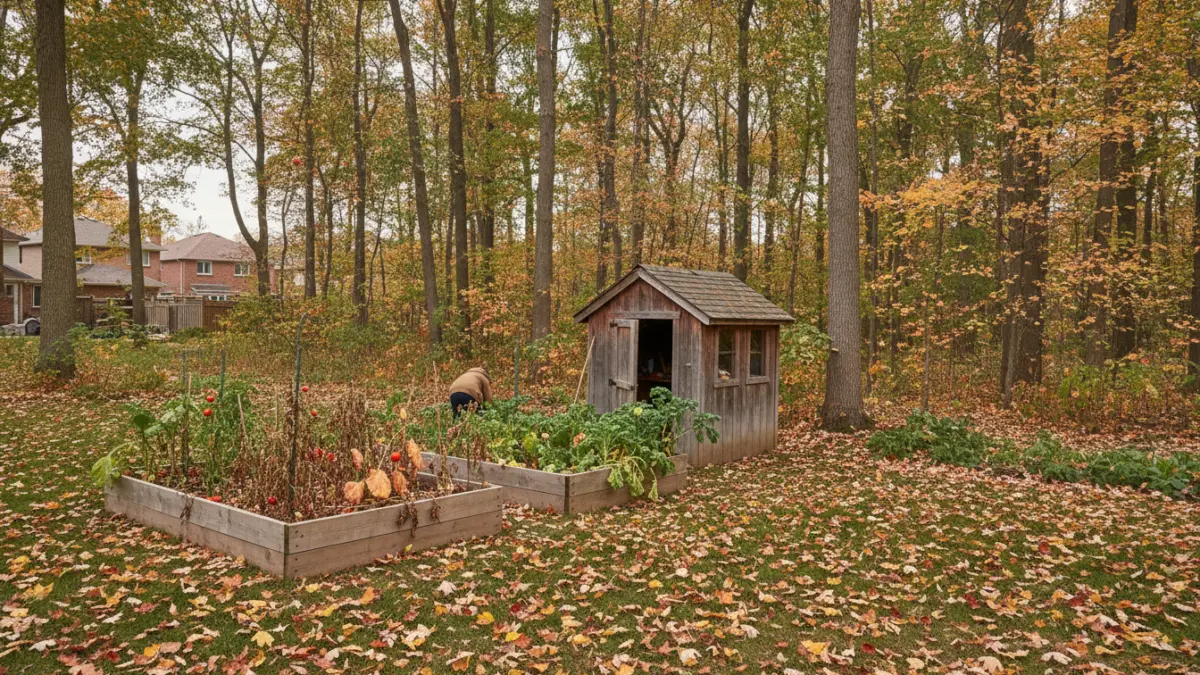
The privacy, trees and trail access are why people pay for these lots. The upkeep habits are different from a regular backyard, and the City of Toronto’s guide for ravine property owners lists the main ones:
- Do not dump yard waste over the fence. Leaves, compost and clippings smother plants, spread invasive species and block drainage. In Toronto’s protected area, fallen leaves and branches count as refuse under the by-law.
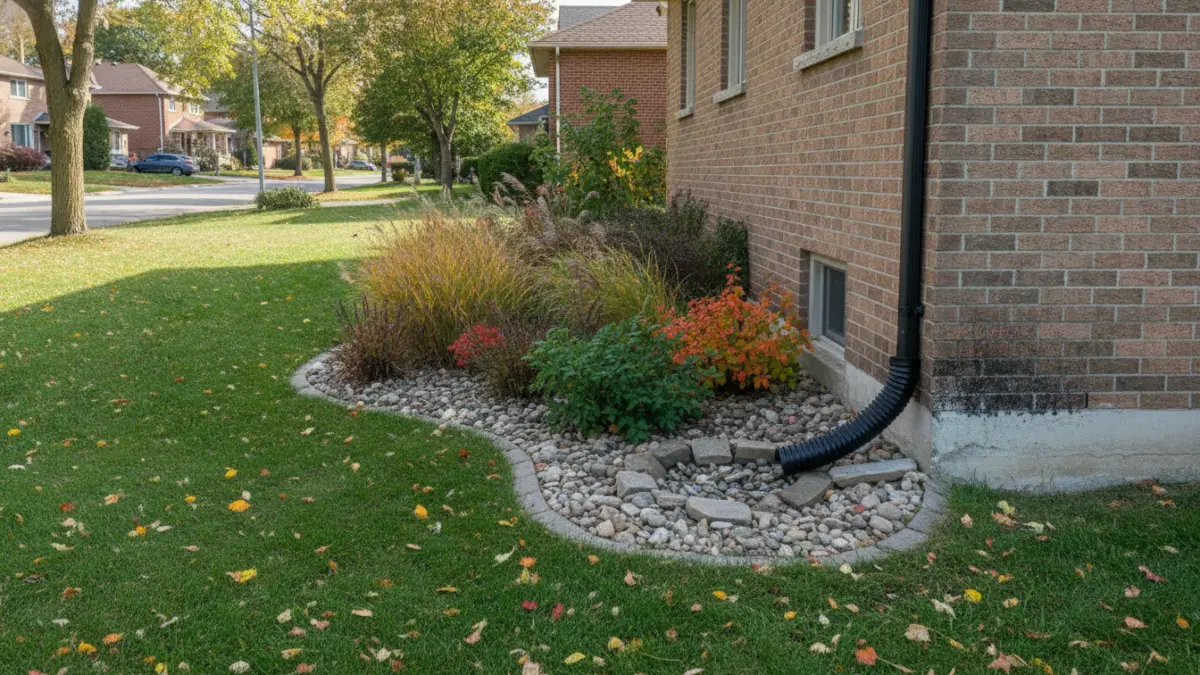
- Keep water off the slope. Downspouts, patio runoff and automatic sprinklers aimed at the bank can cause erosion and slope failure. The City suggests rain gardens or flat areas for downspouts.
- Never drain a pool or hot tub into the ravine. The water has to go to a sanitary sewer connection. If you are thinking about a pool, see our backyard pool cost guide for permit and water costs.
- Leave a buffer. The City recommends leaving about 3 metres of plants or uncut grass at the top of the ravine.
- Watch for invasive plants. Examples named by the City include goutweed, Norway maple, common buckthorn, dog-strangling vine and garlic mustard.
- Know the warning signs. Tilting or cracked foundations, leaning trees or fences, new cracks in the ground, exposed roots and unexpected seepage can be early signs of slope movement.
Buyer checklist
- Map the lot. Check the conservation authority’s regulated area map and, in Toronto, the City’s interactive map for the ravine by-law layer. Our neighbourhood research checklist lists the official tools by city.
- Order a property inquiry. For a firm answer on regulation and past permits, a conservation authority property inquiry letter is the formal route. CVC charges $392.
- Get a survey. Compare the fence, shed and garden edges with the actual lot line.
- Ask for permits for everything in the back yard. Decks over 15 square metres, pools, retaining walls, additions and regrading near the slope may have needed both a city and a conservation authority permit. Unpermitted work is covered in our guide to buying with unpermitted renovations.
- Look at the slope. Walk the top of bank. Note leaning fences, cracked patios, erosion gullies and dumped yard waste. A home inspector can flag concerns, and a geotechnical engineer can assess a slope if needed.
- Plan your projects before you firm up. If you are buying for a pool, an addition or a bigger deck, ask the conservation authority whether it is likely to be allowed before your conditions expire.
- Check the floodplain separately. A regulated area is not the same as a floodplain. Some ravine lots are both.
This guide is general information, not legal or engineering advice. Rules depend on the exact lot and the conservation authority. Confirm with the conservation authority, the city and your real estate lawyer before you buy or build.
Looking at a home that backs onto a ravine or green space? Start your search with us, or get a free home evaluation if you already own one.
FAQ
Can I build a deck if my backyard backs onto a ravine?
Often yes, but it may need a permit. Under Ontario Regulation 41/24, an unenclosed detached deck or patio of 15 square metres or less is exempt from a conservation authority permit if it is not in a watercourse or wetland and is not cantilevered. Larger decks in a regulated area usually need one, and city building permits and zoning still apply.
Can I cut down a tree in a Toronto ravine area?
Not without a permit unless an exemption applies. Toronto’s Chapter 658 covers trees of any species and any size in the protected area. Fines start at $500 per tree and can reach $100,000.
How far does a conservation authority’s regulated area reach?
For a stable, visible river or stream valley, it runs to 15 metres beyond the stable top of bank. Around a wetland it covers the land within 30 metres. The exact line depends on the conservation authority’s mapping and site conditions.
What if the fence is on conservation or city land?
That is an encroachment. In Mississauga, for example, the owner may have to remove it or apply for an encroachment agreement, and a buyer who inherits one may be responsible for restoration costs. A survey before you firm up shows where the line is.
What happens if work was done without a conservation authority permit?
Fees go up and the work may have to be removed. TRCA charges 200% or 300% of the usual fee for work started without a permit, plus a $2,750 non-compliance fee per issue. CVC charges two or three times the fee and handles non-compliant work through enforcement.
Sources
- Government of Ontario, O. Reg. 41/24, Prohibited Activities, Exemptions and Permits, Conservation Authorities Act (sections 2 and 5).
- City of Toronto, Municipal Code Chapter 658, Ravine and Natural Feature Protection, consolidated September 1, 2026.
- City of Toronto, Ravine and Natural Feature Protection Permit Application, form 41-0085, 2026.
- City of Toronto, Property Owners Guide to Healthy Ravines, 2026.
- Toronto and Region Conservation Authority, Development Permitting Fee Schedule, effective February 1, 2026.
- Credit Valley Conservation, 2026 Permit Fees.
- City of Mississauga, Encroachments on City property, updated January 27, 2026.
Images: AI-generated illustrations created for this guide. They do not show real properties.
Local Toronto, HomeLife Landmark Realty Inc., Brokerage.