Verified November 26, 2026. Prices are from TRREB’s October 2026 Market Watch, released November 4, 2026. Tax figures use the City of Oshawa’s 2026 final rates.
Short answer: Oshawa is the largest city in Durham Region and, in October 2026, the lowest-priced of Durham’s lakeshore municipalities on TRREB’s figures. The average sale was $653,466 (median $623,750) across 152 sales, and the average detached house sold for $705,333. The total 2026 residential tax rate is 1.575342%. Oshawa is the end of the Lakeshore East GO line today, and Metrolinx has started building an 18.7 km extension with two new Oshawa stations. No opening date has been published.
Oshawa at a glance
Oshawa sits on Lake Ontario between Whitby to the west and Clarington to the east. It is a lower-tier municipality inside the Regional Municipality of Durham, so the Region runs services such as water and sewers, regional roads and Durham Region Transit, while the City handles local roads, parks, planning and by-laws.
The 2021 Census counted 175,383 people in the city, up 10.0% from 159,458 in 2016, on a land area of about 145.7 square kilometres. The City notes that the name Oshawa comes from an Indigenous name usually translated as “where we must leave our canoes”.
The city has three broad parts that buyers tend to compare. South Oshawa runs down to the harbour, Lakeview Park and Second Marsh. Central Oshawa holds the downtown, the older street grid and Parkwood Estate, the former home of R.S. McLaughlin, founder of General Motors of Canada, now a National Historic Site. North Oshawa, around the shared Durham College and Ontario Tech University campus and up toward Highway 407, is where most of the newer subdivisions are.
Home prices by type, October 2026
TRREB reports Oshawa as one municipality in its monthly Market Watch. It also publishes a quarterly community report for areas such as Central and Eastdale, but this guide uses the citywide monthly figures, which are the most recent available. Monthly counts outside detached houses are small, so a handful of sales can move an average.
| Home type | Sales | Average price | Median price | Avg. days on market |
|---|---|---|---|---|
| All home types | 152 | $653,466 | $623,750 | 29 |
| Detached | 108 | $705,333 | $682,500 | 26 |
| Semi-detached | 14 | $590,000 | $605,000 | 19 |
| Freehold townhouse (att/row) | 11 | $596,227 | $622,500 | 52 |
| Condo townhouse | 13 | $450,108 | $449,900 | 38 |
| Condo apartment | 6 | $413,500 | $412,500 | 57 |
| Year to date, all types (Jan to Oct) | 1,529 | $698,078 | $665,000 | 27 |
Detached houses made up 108 of the 152 sales, which tells you what most of the city’s resale stock is. Homes sold for 98% of the final list price on average. There were 396 new listings during the month and 630 active listings at month end, and TRREB’s trend measure put months of inventory at 3.7.
The October average was below the year-to-date average of $698,078, and both are well below the early 2022 peak. A November 2026 insauga report on the same TRREB data noted that Oshawa’s average had passed $1 million in February 2022.
Benchmark prices and how Oshawa compares
The MLS Home Price Index tracks a typical home rather than whatever happened to sell that month, so it is steadier than the average. Here is Oshawa by home type, with Clarington, Durham Region and the whole TRREB area for context.
| Area and type | Benchmark | Change from Oct 2025 |
|---|---|---|
| Oshawa composite | $694,400 | -6.76% |
| Oshawa single-family detached | $745,800 | -6.45% |
| Oshawa single-family attached | $594,400 | -6.94% |
| Oshawa townhouse | $474,400 | -13.27% |
| Oshawa apartment | $404,300 | -6.04% |
| Clarington composite | $728,200 | -5.28% |
| Durham Region composite | $798,100 | -5.11% |
| All TRREB areas composite | $916,400 | -4.28% |
On average sale prices, Oshawa ($653,466) came in below Clarington ($742,452), Pickering ($821,211), Whitby ($876,275) and Ajax ($918,704) in October 2026. If you are comparing the lakeshore towns, our guides to living in Whitby, living in Ajax and living in Pickering cover each one’s prices, GO stations and tax rates in more detail.
GO trains, VIA and the Bowmanville Extension
Durham College Oshawa GO today
Oshawa’s train station is at 915 Bloor Street West, just south of Highway 401. It is the eastern end of the Lakeshore East GO line and is also served by VIA Rail’s Corridor trains. In 2022 Metrolinx sold the station’s naming rights to Durham College, which is why it is now called Durham College Oshawa GO, even though the college’s main campus is in north Oshawa.
GO Transit lists free parking in the main lot (2,390 spaces), along with reserved and carpool parking. Metrolinx is rebuilding parts of the station to prepare for the extension. Its construction notice says about 230 spaces are expected to be unavailable while a temporary bus area is in use, a further 480 to 555 spaces at a later stage, and that work on a station building addition and a new pedestrian bridge is set to start in May 2027. If you plan to drive to the train, check the current notice before you count on a spot.
The Bowmanville Extension
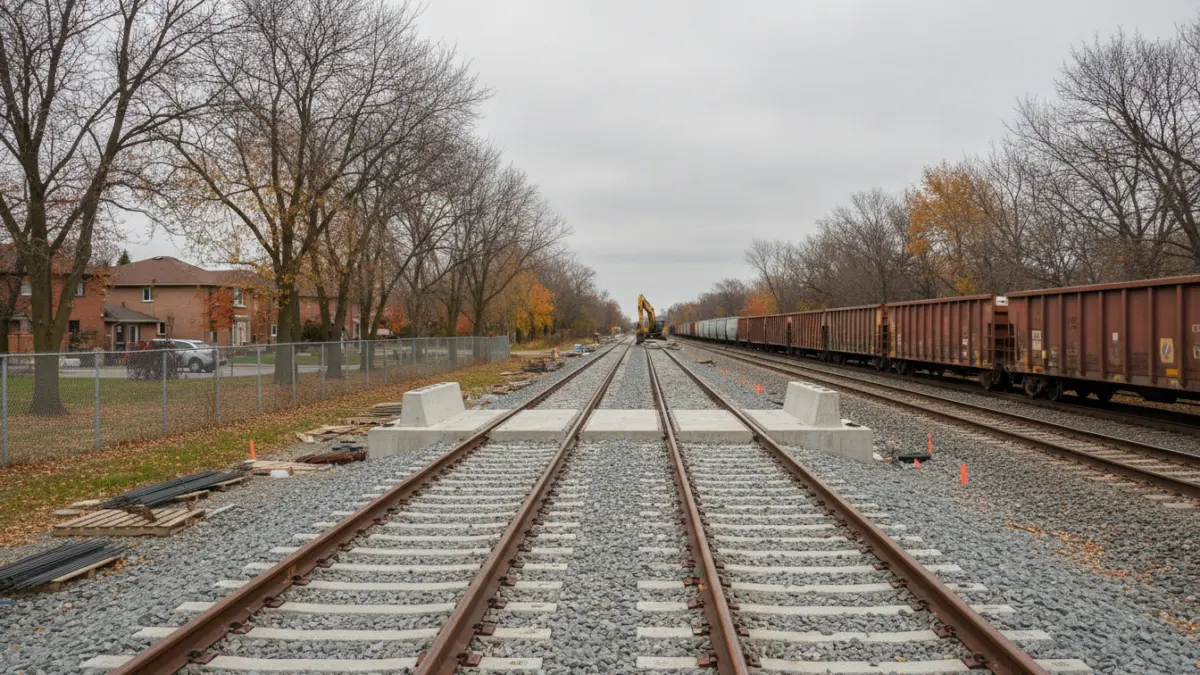
The Province broke ground on the GO Lakeshore East extension to Bowmanville on January 28, 2026. It adds 18.7 km of service from Durham College Oshawa GO, using the former General Motors rail spur to cross Highway 401 and join the CPKC line north of the highway. Four stations are planned, two of them in Oshawa:
- Thornton’s Corners East GO, near Fox Street and Laval Drive.
- Central Oshawa GO (Ritson GO), at 500 Howard Street between Simcoe Street South and Ritson Road South, on the former Knob Hill Farms site.
- Courtice GO and Bowmanville GO, in Clarington.
The Province’s announcement described trains every half hour in peak periods, hourly off-peak and every two hours on weekends. Metrolinx expects about 17,000 daily riders by 2041. The project includes replacing the Simcoe Street bridge in Oshawa. Neither the Province nor Metrolinx has published an opening date, so treat any date you see in a listing as a guess.
Homes close to the new stations may change as station areas develop. Our guide to living near a GO station explains what station-area planning usually means for nearby streets, and our guide to buying a home near a railway line covers noise, vibration and warning clauses, which matter along the CPKC corridor.
Highways and local transit
Highway 401 crosses the south half of the city, and Highway 407 runs along the north edge. Highway 412 in Whitby and Highway 418 in Clarington link the two, and the Province removed tolls on both in April 2022. Highway 407 itself is tolled, so check current rates if you plan to use it every day.
Local buses are run by Durham Region Transit. Routes connect the GO station with the Oshawa Centre terminal, Courtice and Bowmanville, and GO buses run along the 401 and 407 corridors. We cover DRT’s July 2026 fares in our Whitby guide rather than repeat them here. We have not stated commute times because they depend heavily on time of day and where in Oshawa you start.
Jobs, colleges and the GM plant
General Motors still shapes the local economy. GM Canada’s Oshawa Assembly plant returned to two shifts on February 2, 2026, with about 500 employees placed on layoff, according to the company. GM says Oshawa is its only North American plant building light-duty and heavy-duty Chevrolet Silverado pickups on the same line, and that a $280 million investment is preparing the plant for the next generation of gas-powered full-size pickups.
North Oshawa is home to Durham College and Ontario Tech University, which share a campus. The City keeps separate pages for students and tenants. If you are buying a house to rent out, read the City’s rental and second-unit rules before you make an offer.
Waterfront, parks and trails
Oshawa’s section of the Waterfront Trail is about 11 km long. The main stops are:
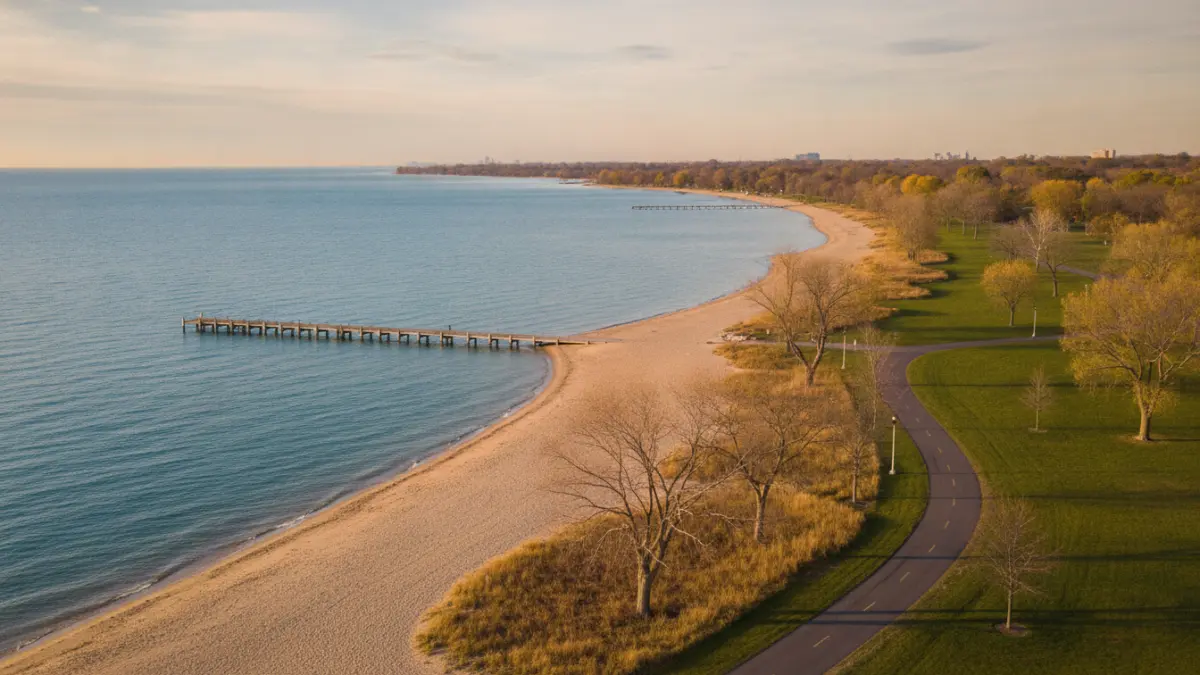
- Lakeview Park, the city’s largest park, with a sandy beach, picnic areas, sports fields and a pier. The City started the final phase of a renewal project this fall.
- Ed Broadbent Waterfront Park, at Simcoe Street and Harbour Road, with an amphitheatre, paths and a pedestrian bridge over Oshawa Creek.
- Oshawa Second Marsh, a provincially significant coastal wetland of about 123 hectares in the southeast end, next to the McLaughlin Bay Wildlife Reserve, which has almost 7 km of walking and cycling trails.
- The Joseph Kolodzie Oshawa Creek Bike Path, which runs north from Lakeview Park along the creek.
From May 15 to October 15, paid parking applies at Lakeview Park and Ed Broadbent Waterfront Park on weekends, holidays and City event days. Oshawa residents can park free by registering for a waterfront parking permit.
Property tax in 2026
An Oshawa tax bill has three parts: the City, the Region of Durham and the provincial education rate. The City says it keeps about 40 cents of each residential tax dollar, about 46 cents goes to the Region and about 14 cents to the Province.
| Component | Rate |
|---|---|
| City of Oshawa | 0.659196% |
| Region of Durham | 0.763146% |
| Education (Province) | 0.153000% |
| Total residential rate | 1.575342% |
Taxes are charged on your MPAC assessment, not on what you pay for the house. Ontario still uses January 1, 2016 values for 2026 taxes, so assessments are usually far below today’s prices. The City’s 2026 budget used a $356,000 assessment as its example property. At the 2026 rate, that home pays about $5,608 a year.
| MPAC assessment | Estimated annual tax | About per month |
|---|---|---|
| $300,000 | $4,726 | $394 |
| $356,000 (City example) | $5,608 | $467 |
| $400,000 | $6,301 | $525 |
| $450,000 | $7,089 | $591 |
Oshawa’s total rate is higher than in several nearby towns, but the City points out that rates alone do not compare well, because a lower assessment base needs a higher rate to raise the same money. Compare dollar amounts on real assessments instead. For 2026, the final bill instalments were due September 29 and October 30. See our GTA property tax rates guide for other cities, and our guide to challenging an MPAC assessment if a home’s assessment looks wrong.
Land transfer tax at Oshawa prices
Oshawa buyers pay only Ontario’s land transfer tax. There is no municipal land transfer tax outside the City of Toronto. Eligible first-time buyers can get a provincial refund of up to $4,000, which covers the full tax on homes up to $368,333.
| Price (TRREB median) | Ontario LTT | First-time buyer pays |
|---|---|---|
| $412,500 (condo apartment) | $4,725 | $725 |
| $449,900 (condo townhouse) | $5,473 | $1,473 |
| $623,750 (all home types) | $8,950 | $4,950 |
| $682,500 (detached) | $10,125 | $6,125 |
How it is calculated: 0.5% on the first $55,000, 1% from $55,000 to $250,000, 1.5% from $250,000 to $400,000 and 2% from $400,000 to $2 million. At $623,750, that is $275 + $1,950 + $2,250 + $4,475 = $8,950. Our land transfer tax guide explains who counts as a first-time buyer, and our FHSA and Home Buyers’ Plan guide covers saving for the down payment.
Tax and land transfer tax estimator
Uses the 2026 Oshawa residential rate of 1.575342% and Ontario land transfer tax brackets. Estimates only; your bill and closing statement are what count.
Checks before you buy in Oshawa
- GO plans near the home. Look at where Thornton’s Corners East and Central Oshawa GO will sit, and whether the street is near the CPKC corridor or the GM spur that the extension will use.
- Floodplain and creeks. Oshawa Creek, Harmony Creek and their tributaries run through the city. The Central Lake Ontario Conservation Authority regulates these areas. Our floodplain map guide shows how to check a property.
- Condo documents. With condo apartments and townhouses selling more slowly than houses in October, take time with the status certificate and reserve fund before you firm up.
- Second units and rentals. If a listing advertises a basement apartment, ask whether it is registered or permitted with the City.
- Station parking. If you will drive to Durham College Oshawa GO, read the current Metrolinx construction notice.
Our checklist on how to research a GTA neighbourhood before you buy lists the official map tools for zoning, development applications and floodplains.
This guide is general information, not legal, tax or mortgage advice. Confirm details with your lawyer, lender and the City of Oshawa before you buy.
Thinking about Oshawa or elsewhere in Durham? Start a home search with Local Toronto, or if you own now, get a free home evaluation to see what your current home could sell for. You can also browse our city guides.
FAQ
What is the average home price in Oshawa?
TRREB reported an average sale price of $653,466 and a median of $623,750 for all home types in Oshawa in October 2026, from 152 sales. Detached houses averaged $705,333. The MLS HPI composite benchmark was $694,400, down 6.76% from October 2025.
Does Oshawa have a GO train station?
Yes. Durham College Oshawa GO at 915 Bloor Street West is the eastern end of the Lakeshore East GO line and is also a VIA Rail stop. GO Transit lists 2,390 free spaces in the main lot, though some spaces are closed during station construction.
When will the new Oshawa GO stations open?
No opening date has been published. The Province broke ground on the Bowmanville Extension on January 28, 2026. It adds Thornton’s Corners East GO and Central Oshawa GO in Oshawa, plus Courtice and Bowmanville stations in Clarington.
What is the property tax rate in Oshawa?
The 2026 total residential rate is 1.575342%: 0.659196% for the City, 0.763146% for the Region of Durham and 0.153% for education. A home assessed at $356,000, the City’s budget example, pays about $5,608 a year.
Is there a municipal land transfer tax in Oshawa?
No. Oshawa buyers pay only the Ontario land transfer tax. On the October 2026 all-types median of $623,750, that is $8,950, or $4,950 for an eligible first-time buyer after the $4,000 refund.
How big is Oshawa?
The 2021 Census counted 175,383 people, up 10.0% from 2016, on about 145.7 square kilometres. It is the largest municipality in Durham Region.
Sources
- Toronto Regional Real Estate Board, Market Watch October 2026 (Oshawa, Durham Region and TRREB tables by home type, year to date and MLS HPI), November 4, 2026.
- City of Oshawa, Property Tax Rates page and 2026 Final Property Tax By-law 32-2026 (rates and instalment dates), 2026.
- City of Oshawa, How the City Gets Money and 2026 Budget Overview (tax dollar split, $356,000 example assessment), 2026.
- City of Oshawa, GO East Durham page (station locations, route, milestones), 2026.
- Government of Ontario, release on the Bowmanville GO Extension groundbreaking, January 28, 2026.
- Metrolinx, Bowmanville Extension project page (ridership forecast, timeline), 2026.
- GO Transit, Durham College Oshawa GO station details and station improvements construction notice, 2026.
- Government of Ontario, release on removing tolls from Highways 412 and 418, February 18, 2022.
- GM Canada, Oshawa Assembly moves to two shifts, January 29, 2026.
- City of Oshawa, Waterfront and Parks and Trails pages (Lakeview Park, Ed Broadbent Waterfront Park, Second Marsh, waterfront parking), 2026.
- Waterfront Regeneration Trust, Oshawa community profile (Waterfront Trail length), 2026.
- Statistics Canada, 2021 Census population and dwelling counts (Oshawa), February 9, 2022.
- insauga, report on TRREB October 2026 prices compared with February 2022, November 2026.
- Government of Ontario, land transfer tax rates and first-time homebuyer refund.
Images: AI-generated illustrations created for this guide. They do not show real properties.
Local Toronto, HomeLife Landmark Realty Inc., Brokerage.