Verified October 17, 2026 against TRREB’s Municipal Election Watch of October 16, 2026 and the City of Toronto’s advance voting release of October 13, 2026.
The short version: With Ontario’s municipal elections on Monday, October 26, 2026, the Toronto Regional Real Estate Board (TRREB) has published a region-wide roundup of where housing sits in each GTA race. In Toronto, land transfer tax relief, rental construction and property tax limits are on the table. In Mississauga, the three candidates at a TRREB-hosted debate all opposed a municipal land transfer tax. Development charges are the main housing issue in Brampton, Peel and York. Toronto also recorded 222,550 advance voters, about 92% more than in 2022.
What TRREB published
TRREB represents almost 70,000 REALTORS. Its October 16 Election Watch is part of its Removing Roadblocks campaign, which asks municipal candidates to commit to measures that it says would improve affordability, increase housing supply and cut barriers to homeownership. TRREB is an industry association with its own policy positions, and the roundup reflects them.
The piece covers Toronto, Mississauga, Brampton and Peel, Oakville and Halton, York Region, Durham and Barrie and Simcoe County. It refers to new polling in Toronto and recent polling in Mississauga but does not say who conducted it or publish the numbers, so we do not report it here.
Toronto
TRREB notes that Chris Alexander withdrew from the race on October 6, leaving a more direct contest between incumbent Mayor Olivia Chow and Councillor Brad Bradford. It lists three housing-related commitments in the Toronto campaign:
| Commitment | What it would mean |
|---|---|
| Municipal Land Transfer Tax relief on the first $1.1 million | For eligible first-time buyers and for existing Toronto homeowners moving within the city |
| 10,000 additional rental homes | At least 20% affordable, with qualifying projects ready to start construction within 12 months |
| Property tax limit | Freeze annual increases, or hold them to no more than one percentage point above inflation |
TRREB’s piece does not say which candidate made each commitment. Our guide to where the GTA mayoral candidates stand on housing sets out each candidate’s platform, with sources.
The land transfer tax matters because Toronto is the only Ontario city that charges its own tax on top of the provincial one. On a $1.1 million home, the City of Toronto’s share is about $18,475, so relief on the first $1.1 million would remove most or all of the municipal tax for many buyers. Our cash to close breakdown shows how both taxes add up at closing.
Turnout. The City of Toronto says 222,550 eligible voters cast ballots during six days of advance voting from October 6 to 11, compared with 115,911 advance votes in 2022. TRREB cautions that higher advance turnout does not necessarily mean higher turnout overall.
Mississauga
TRREB describes the Mississauga race as close among former mayor Bonnie Crombie, incumbent Mayor Carolyn Parrish and Councillor Alvin Tedjo, followed by Councillor Dipika Damerla. It does not publish the polling behind that description.
TRREB and the Cornerstone Association of REALTORS co-hosted a member-only mayoral debate on October 5 at the Mississauga Convention Centre, moderated by CP24’s Jee-Yun Lee. Crombie, Damerla and Tedjo took part. Parrish was invited but could not attend.
- Municipal land transfer tax: all three candidates at the debate said they opposed pursuing one in Mississauga.
- Downtown civic lands: redevelopment of city-owned land downtown is a campaign issue.
- Six-plexes: allowing six-unit buildings as of right on certain arterial roads is also under discussion.
Brampton, Halton, York, Durham and Simcoe
| Area | Issues TRREB highlights |
|---|---|
| Brampton and Peel Region | Development charges and regional relief on housing costs |
| Oakville and Halton Region | The Midtown Oakville growth plan, intensification and infrastructure capacity. A mayoral forum is scheduled for October 18. |
| York Region | Affordability, development charges and coordinating approvals with transit, water and wastewater servicing |
| Durham Region | An open mayoral race in Oshawa focused on downtown safety and revitalization; in Pickering, differing views on development in northeast Pickering and Seaton |
| Barrie and Simcoe County | Proposals to delay capital projects and to raise development charges on some commercial and industrial development |
Development charges are fees municipalities charge on new construction to pay for growth-related infrastructure. Builders generally pass them on in the price of new homes. Our article on which GTA cities have cut development charges tracks where they stand.
TRREB’s housing asks
Across the region, TRREB is asking candidates to:
- Reduce land transfer taxes and oppose new ones, including any new municipal land transfer tax
- Reduce development charges and manage them alongside infrastructure funding
- Speed up development approvals
- Support a wider range of housing, including six-plex permissions and rental construction
- Make sure infrastructure keeps pace with growth
Not everyone agrees with these positions. Some candidates and councils argue that lower land transfer taxes or development charges mean less money for transit, water and other services, or higher property taxes to make up the gap. Our earlier piece on who should pay for growth in the GTA looks at both sides.
Why it matters to buyers, sellers and owners
- Toronto buyers: a change to the municipal land transfer tax would change the cash you need on closing day. Nothing changes until council passes it, so do not count on relief in an offer you sign now.
- Owners: property tax pledges affect your yearly bill. Council votes on each year’s budget, so a campaign promise is a starting point, not a rate.
- New-home buyers: development charge decisions in Peel, York and Halton feed into new-build prices and the timing of projects.
- Sellers: election outcomes rarely move prices on their own. Interest rates matter more right now, with the Bank of Canada deciding on October 28.
If you are planning a move in the next year, we can walk you through what each scenario would mean for your closing costs. See how we help buyers.
How to vote
Election day is Monday, October 26, 2026. In Toronto, voting places are open from 10 a.m. to 8 p.m., and you must vote at the place assigned to you on your Voter Information Card or listed on the City’s election website. Other municipalities set their own hours and locations, so check your city’s election page. Bring identification that shows your name and address; each city publishes the list of accepted ID.
FAQ
When is the 2026 municipal election in Ontario?
Monday, October 26, 2026. In Toronto, voting places are open from 10 a.m. to 8 p.m.
What is TRREB’s Election Watch?
A roundup published by the Toronto Regional Real Estate Board on October 16, 2026, summarizing housing issues in GTA municipal races as part of its Removing Roadblocks advocacy campaign.
Which land transfer tax commitment is on the table in Toronto?
TRREB lists Municipal Land Transfer Tax relief on the first $1.1 million for eligible first-time buyers and existing Toronto homeowners moving within the city. It would need council approval after the election.
Will Mississauga add a municipal land transfer tax?
According to TRREB, the three candidates at its October 5 debate, Bonnie Crombie, Dipika Damerla and Alvin Tedjo, all opposed pursuing one. Mayor Carolyn Parrish did not attend.
How many people voted early in Toronto?
The City of Toronto says 222,550 eligible voters voted during advance voting from October 6 to 11, 2026, compared with 115,911 advance votes in 2022.
Sources
- TRREB, Municipal Election Watch, October 16, 2026, and the Removing Roadblocks campaign
- City of Toronto, Turnout increases for advance voting in Toronto’s 2026 municipal election, October 13, 2026
- City of Toronto municipal land transfer tax figure, as reported in our candidate guide
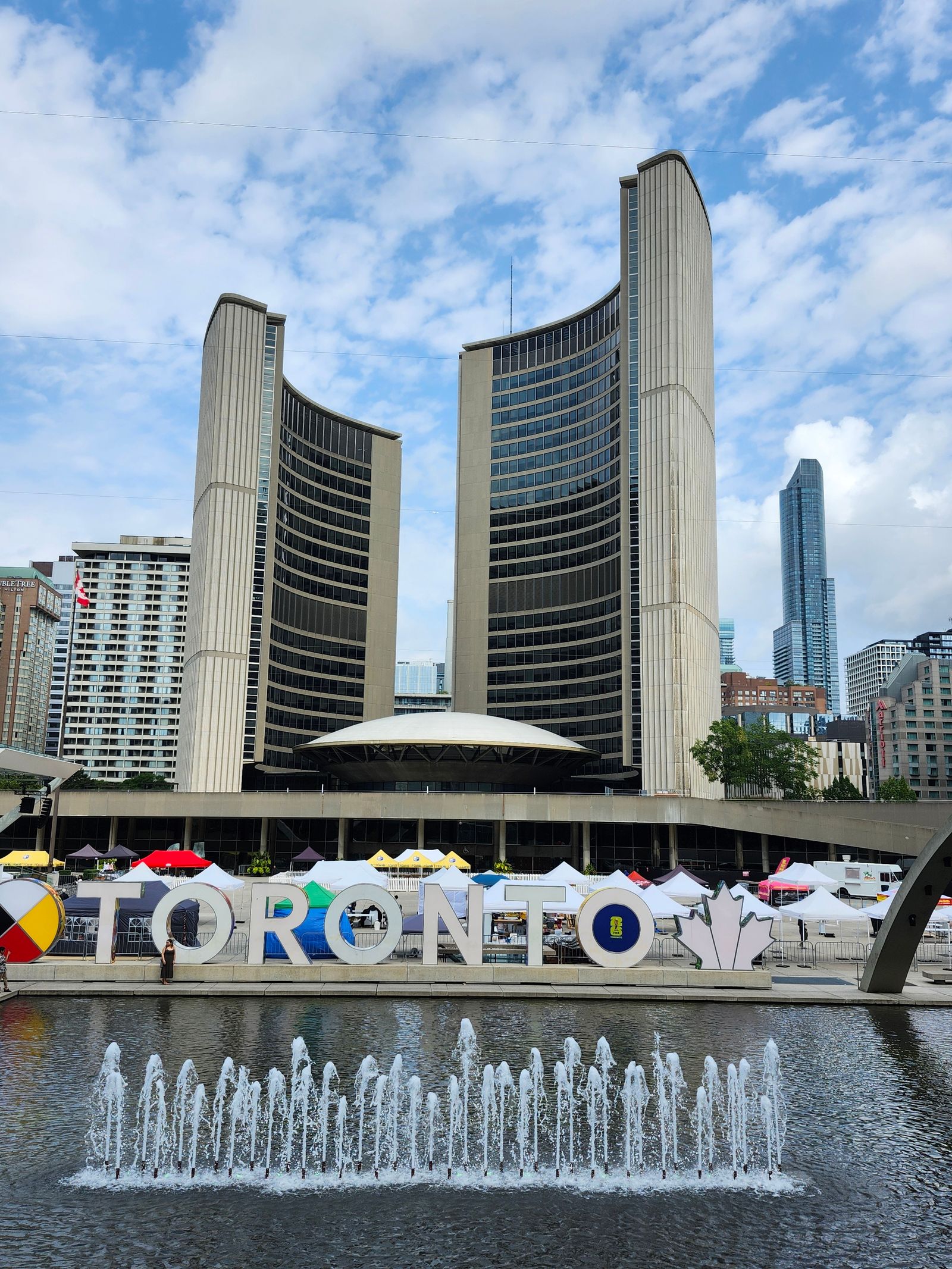
Featured image: Local Toronto media library.
This is a news summary. Local Toronto does not endorse any candidate. Local Toronto, HomeLife Landmark Realty Inc., Brokerage.