Verified November 21, 2026. Checked against City of Toronto pages on frozen pipes (modified November 17, 2026), no water or low pressure (modified November 10, 2026), water turn on or off (modified May 28, 2026), the 2026 water rates and fees schedule and the Priority Lead Water Service Replacement Program (modified July 31, 2026), plus Peel Region pages on private-side water pipes, water shut off or turn on, 2026 service charges and the High Water Bill Adjustment Program.
Short answer: the water service pipe is split at your property line. In Toronto, the City owns and repairs the part from the watermain under the street to the property line. In Mississauga and Brampton, Peel Region owns that public part. Everything from the property line into your house, including the indoor plumbing and the main shut-off valve, belongs to you. If a pipe freezes or bursts on your side, you hire and pay a licensed plumber. If the problem is on the public side, the City or the Region fixes it at no charge.
This question comes up every winter, usually at the worst moment: the taps run dry on a cold morning, or there is water on the basement floor. Knowing where your responsibility starts tells you who to call first and what it will cost. It also matters when you buy or sell a home, because the pipe that brings water into an older house can be decades old.
Who owns which part of the pipe
The pipe that carries drinking water from the street into your home is called the water service pipe. Toronto and Peel Region divide it the same way, at the property line. Toronto’s frozen pipes page states that property owners and landlords are responsible for the part that runs from the property line into the home. Peel Region says homeowners are responsible for maintaining and replacing the private-side pipe, and that it cannot replace that pipe because it does not own it.
Water in Mississauga and Brampton is a Peel Region service, so the Region, not the two cities, is the one to call about water pipes, meters and shut-offs. Mississauga’s own guide to who owns what around a home makes the same point about the private side of the property line.
| Part | Toronto | Mississauga and Brampton (Peel Region) |
|---|---|---|
| Watermain under the street | City of Toronto | Peel Region |
| Service pipe from the watermain to the property line | City of Toronto | Peel Region |
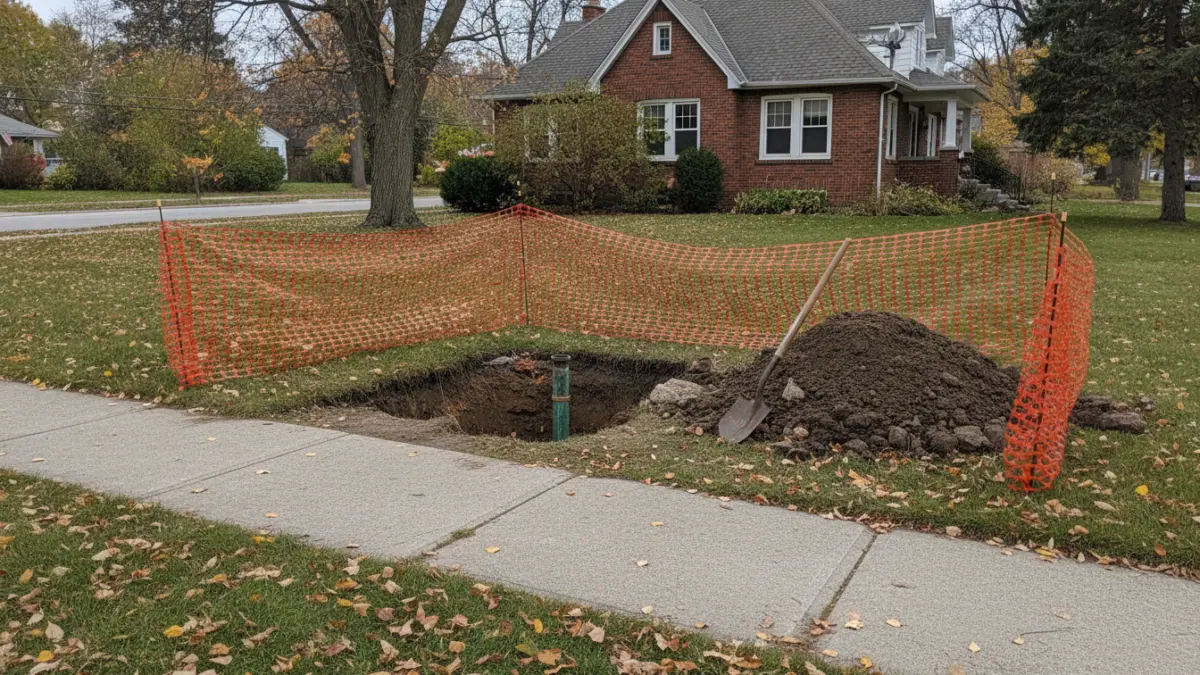
| Shut-off at the property line (curb stop or water service box) | Operated by the City; a fee applies to turn it off or on for private work | Operated by the Region; one free turn-off and turn-on a year |
| Service pipe from the property line into the house | Property owner | Property owner |
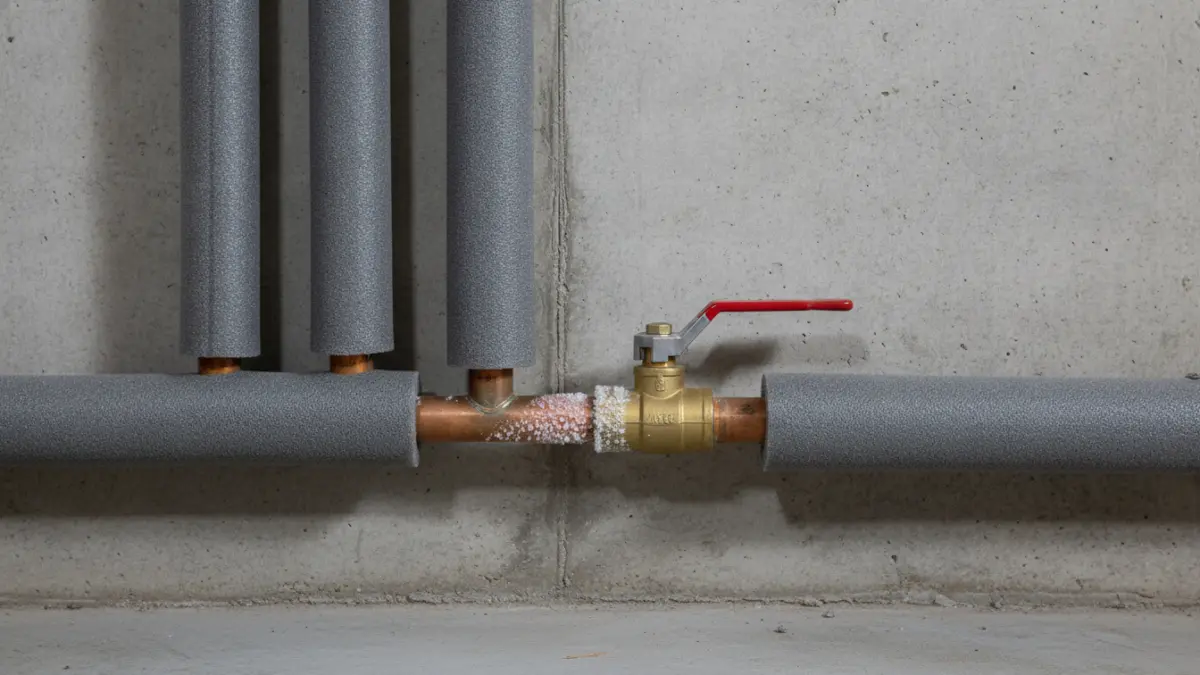
| Main shut-off valve inside the house | Property owner (part of your private plumbing) | Property owner (Peel suggests operating it every 6 months) |
| Water meter | City property; only City staff should remove it | Owned and maintained by Peel Region |
| Indoor plumbing | Property owner | Property owner |
The practical result: most frozen and burst pipes are the owner’s problem, because the pipes most exposed to cold are often inside the house, along exterior walls or where the service pipe comes through the foundation.
If your water stops: frozen pipes
A frozen pipe usually shows up as no water at all, or no water at some taps. Before you call anyone, check the simple causes. Toronto’s no-water page suggests confirming that the main shut-off valve is fully open, checking whether only one tap or one part of the house is affected (which points to private plumbing), and looking for nearby construction or a watermain break. The City’s No Water Map shows planned and emergency shutdowns.
Thawing a frozen pipe safely
The City of Toronto’s current advice, updated November 17, 2026, is:
- Look for the frozen section along exterior walls or where the service pipe enters through the foundation.
- Open the basement cold water tap, ideally in the laundry room, so water can flow as the ice melts.
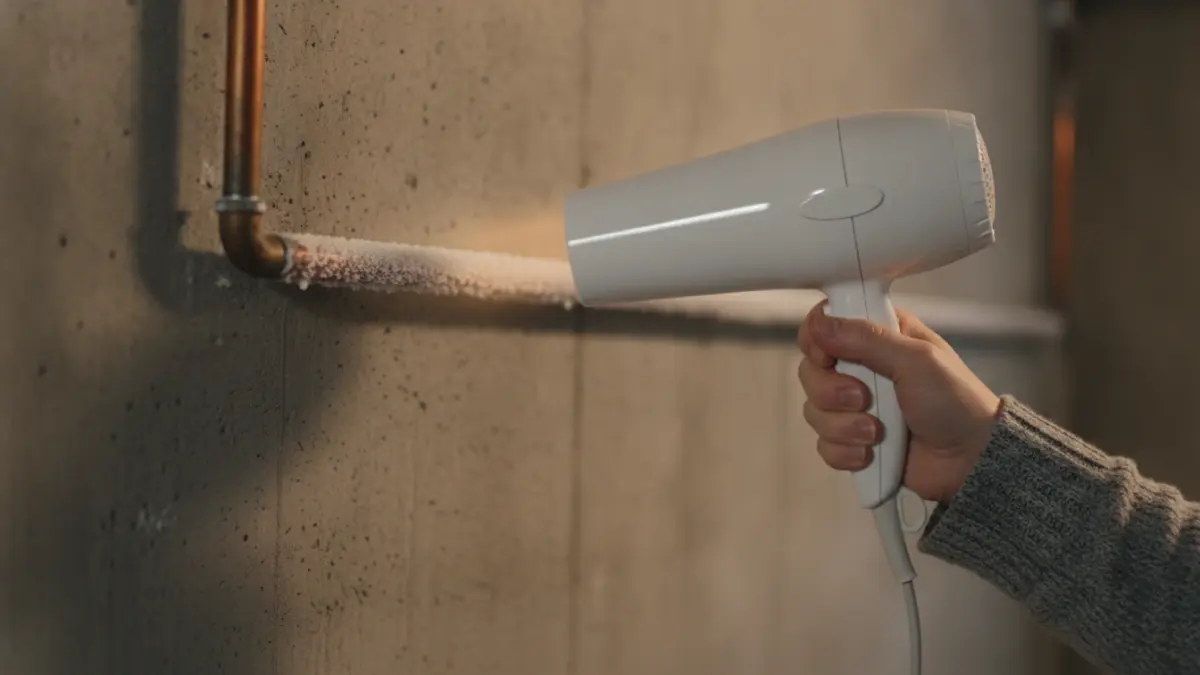
- Warm the pipe with a heating pad, hair dryer or warm towels, and never leave a heating device unattended.
- Never use a blowtorch, propane heater or any open flame. These are fire and carbon monoxide hazards.
- Expect thawing to take one to six hours depending on the weather and how frozen the pipe is.
If you still have no water, call a licensed plumber. In Toronto you can also call 311 or submit a no-water service request. The City says staff will arrive within four hours, and an adult must be on site. If staff find the pipes are frozen on private property, they will tell you to call a plumber. If the problem is on the City’s part of the pipe or the meter, they open a work order, and if the repair will take a long time they will try to set up a temporary water supply.
In Mississauga and Brampton, call Peel Region’s Customer Contact Centre at 905-791-7800. Peel’s position is the same: the Region handles the public side and the meter, and the owner handles everything else.
Preventing a repeat
Toronto’s list of prevention steps is short and practical: seal drafts around windows, doors, vents, wiring and pipes; disconnect hoses and drain outdoor taps; insulate exposed pipes in basements, crawl spaces, garages and attics with foam covers; keep garage doors closed if pipes run through the garage; open cabinet doors under sinks so warm air reaches the plumbing; and find your main shut-off before you need it. If indoor pipes freeze often, the City suggests asking a plumber for advice. Our winter home inspection guide covers what to look for in the basement and around the foundation.
Running a pencil-thin stream of water can help on the coldest nights. Toronto says you may choose to do this when night temperatures drop below minus 15°C, but you will be charged for the water used.
If a pipe leaks or bursts
Act in this order: stop the water, find out where the leak is, then call the right party.
| Situation | First step | Who repairs and pays |
|---|---|---|
| Leak or burst inside the house | Close the main shut-off valve, usually on the foundation wall next to the water meter | Owner, through a licensed plumber |
| Main shut-off valve will not close or is broken | Toronto: call 311 for a turn-off at the property line. Peel: call 905-791-7800 | Owner pays for the valve repair. Toronto charges a turn-off and turn-on fee. Peel must shut off the supply before a plumber can fix the valve |
| Leak on the outside pipe on your property | Call the City or Region to shut off at the property line | Owner repairs the private section and pays any shut-off fees |
| Leak on the public section between the street and the property line | Call 311 (Toronto) or 905-791-7800 (Peel) | The City or Region, at no charge. Toronto waives the turn-off fee in this case |
| Water at the curb or a wet patch on the boulevard | Report it so staff can find the source | Depends on where the leak is found |
Toronto says staff will arrive within two hours for an emergency water turn-off, and that these requests must be made by phone through 311, not online. Peel says staff respond to emergency requests within two hours, depending on the weather. In both areas someone must be home for the visit.
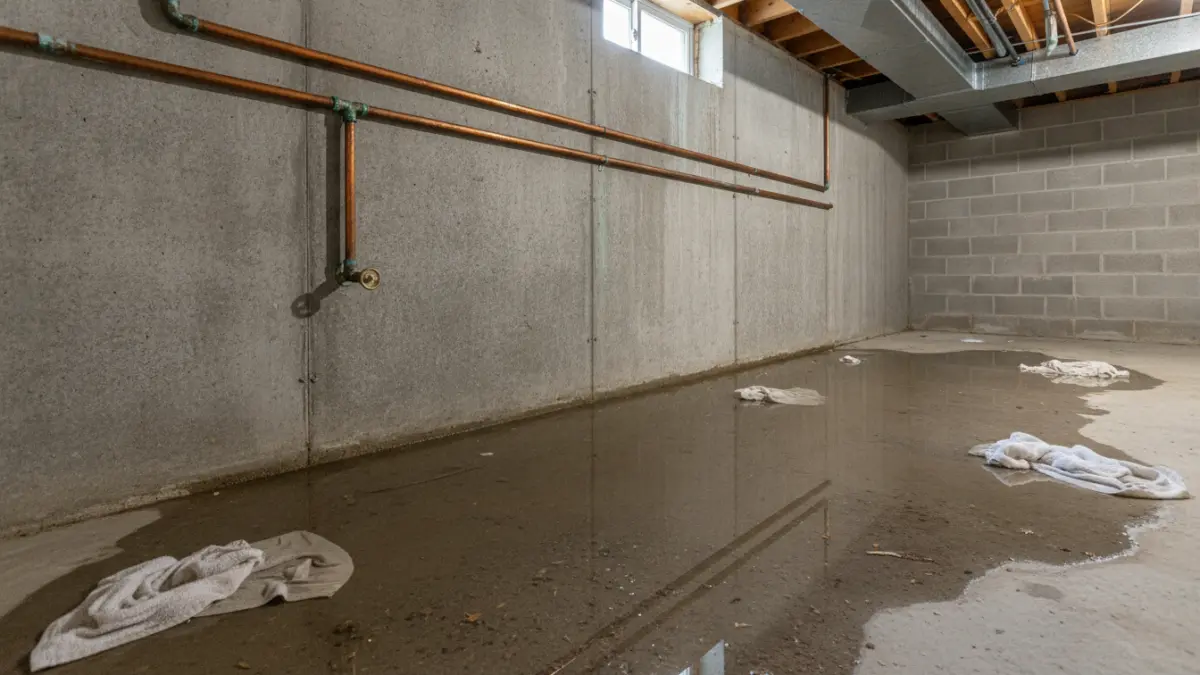
If water has reached the basement, deal with the source first, then document the damage for your insurer. Coverage for water damage and for underground service pipes varies by policy, so check yours before winter rather than after a claim. Peel Region endorses an optional service line warranty plan from Service Line Warranties of Canada that covers frozen, leaking or broken private-side water lines; it is a private product and the Region is not responsible for its work. Our guide to basement flooding subsidies in Toronto, Mississauga and Brampton covers backwater valves and sump pumps, which deal with sewer backup rather than supply pipes.
Fees for shut-offs, meters and upgrades
Repair costs on your side depend on the plumber, the depth of the pipe and how much digging is needed, and no official source publishes a typical price. The municipal fees, however, are fixed and published.
| Service | Toronto (effective January 1, 2026) | Peel Region (2026) |
|---|---|---|
| Turn off or turn on the supply at the property line | $110.13 per turn-off or turn-on, added to the utility bill | First turn-off and turn-on each calendar year free; then $75 per service on weekdays 7 a.m. to 4 p.m., $125 evenings, weekends and holidays |
| Turn-off and turn-on on one call within 30 minutes | $110.13 (the turn-on fee is waived if staff have not left) | Covered by the free annual service, then fees apply |
| Shut-off to fix a leak on public property | No fee | Region repairs its own pipe |
| Cancelling an appointment | Call 311 | 24 hours’ notice, or a fee applies |
| Damaged or frozen meter | Meter is City property; call 311 | Owner pays for a replacement if the meter was damaged or froze from lack of care; standard residential charge $92.67 plus materials |
| Upgrade service from 19 mm to 25 mm during lead replacement | $669.03 | Not applicable |
Two details are easy to miss. In Toronto, the City will not turn off the water because of a landlord and tenant dispute. In Peel, private townhouse and condominium complexes are not eligible for the residential shut-off service; the condominium corporation has to make the request.
The water bill after a leak
Water that passes through the meter is billed, even if it ran into your basement. For a sense of scale, Toronto’s 2026 Block 1 rate is $4.8629 per cubic metre when paid on time. Our guide to water bills in Peel and Toronto explains how each bill is calculated.
Peel Region has a High Water Bill Adjustment Program for bills caused by a leak or water theft. Based on the Region’s page:
- Use must be at least 2.5 times higher than the same billing period the year before.
- The cause must be fixed, and you must apply within 90 days of the bill date.
- The property must not have been vacant for 10 or more consecutive days during the billing period.
- The credit is 50% of the extra water use, up to $12,500, applied to the account, not paid in cash.
- One eligible bill per account every 5 years. High bills from intentional or accidental water use do not qualify.
Toronto handles high bills under Municipal Code Chapter 849. Its high water bill page describes a review for unexplained consumption and asks, among other things, for written verification from a plumbing contractor that the private plumbing is free of leaks. If you had a known leak, read the City’s criteria before you apply, since it is not a general leak credit like Peel’s.
Old and lead service pipes
Age matters as much as cold. Toronto says homes built before the mid-1950s may have lead water service pipes. Peel Region says homes and businesses built before 1960 might have lead in the water service.
Toronto’s Priority Lead Water Service Replacement Program
If the service is lead and you commit to replacing your side, you can ask the City to replace its side on a priority basis. You can hire the City’s contractor to do both sides at the same time, paying for the private side yourself, or hire your own contractor first and then apply with proof such as a plumber’s invoice. The City says applications can take up to two weeks to process, accepted applicants receive a faucet filter, and it aims to replace its portion within 12 weeks of approval. The City-side work is usually done between two small pits with a trenchless method, and permanent concrete or asphalt restoration can take 18 to 24 months. To find out whether your pipe is lead, a licensed plumber can check, or 311 can search City records, which can take up to 30 business days.
Toronto also replaces its portion of substandard pipes during planned road, sewer and watermain work. When that happens on your street, it is a sensible time to replace your side too.
Peel Region
Peel replaces watermains when they are in poor condition and encourages owners to replace their private-side pipe at the same time, noting that in most of Peel the homes and watermains are about the same age. It does not know what builders used on private property, so it cannot estimate how long your pipe will last. Our article on older versus newer homes looks at lead service pipes alongside other big-ticket items in older houses.
Tenants, condos and townhouses
If you rent, report frozen pipes, drafts and leaks to your landlord or property manager right away. Toronto’s frozen pipes page tells tenants to ask who is responsible for outdoor taps, plumbing and shut-off valves, and who to call after hours. In an apartment building, a no-water problem goes to the landlord or superintendent first. Heat is closely tied to frozen pipes, and our guide to landlord heat rules in Toronto, Mississauga and Brampton sets out the minimum temperatures landlords must provide.
In condominiums and condo townhouse complexes, the declaration decides which pipes are common elements and which belong to each unit. Check it, and in Peel remember that shut-off requests in private complexes come from the corporation, not individual owners.
What buyers and sellers should check
A service pipe is buried, so it rarely gets attention during a sale. A few questions can save a costly surprise:
- Age and material. Ask what the service pipe is made of and whether it has been replaced. In Toronto, a 311 records request can show the City side. A home inspector or plumber can look at the pipe where it enters the basement.
- History of freezing. Ask the seller whether pipes have frozen and where. Pipes in a garage, crawl space or along an outside wall are the usual suspects.
- Shut-off valve. Make sure the main valve is easy to reach and works.
- Insurance. Before closing, ask your insurer about water damage and service line coverage.
- Vacant listings. A home left empty in winter needs heat and regular checks. Our guide to selling in winter covers vacant-home precautions.
Not legal or insurance advice. For a specific property, talk to a licensed plumber, a home inspector and your insurer.
Buying an older home in the GTA? We can help you plan the right questions and inspections before you make an offer. Start your home search or browse homes in Toronto, Mississauga and Brampton. Thinking of selling? Get a free home evaluation.
FAQ
Who pays to fix a frozen water pipe in Toronto?
If the frozen section is on your side of the property line or inside the house, you do, through a licensed plumber. If City staff find the problem is on the City’s part of the pipe or the meter, the City creates a work order to fix it.
Who owns the water pipe in Mississauga and Brampton?
Peel Region owns the watermain, the pipe on the public side of the property line and the water meter. The homeowner owns and must maintain and replace the pipe from the property line into the house, plus the indoor plumbing and the main shut-off valve.
How much does it cost to have the water shut off at the property line?
In Toronto the 2026 fee is $110.13 per turn-off or turn-on, with no fee when the shut-off is to fix a leak on City property. In Peel, residential properties get one free turn-off and turn-on each calendar year, then $75 per service during weekday business hours or $125 after hours.
Can I use a torch or space heater to thaw a frozen pipe?
No open flame. The City of Toronto warns against blowtorches, propane heaters and any open flame because of fire and carbon monoxide risk. Use a heating pad, hair dryer or warm towels, keep a basement cold tap open, and never leave a heating device unattended.
Will Peel Region reduce my bill after a burst pipe?
Possibly. Peel’s High Water Bill Adjustment Program can credit 50% of the extra water use, up to $12,500, if use was at least 2.5 times the same period last year, the leak is fixed, you apply within 90 days and the home was not vacant for 10 or more days in a row. It is available once every 5 years per account.
Does the City replace lead pipes on my property?
No. Toronto replaces only the City-owned part, and through its priority program it does so when the owner commits to replacing the private part. Peel Region also says it cannot replace the private-side pipe because it does not own it.
Sources
- City of Toronto, Prevent or Thaw Frozen Pipes, modified November 17, 2026.
- City of Toronto, No Water or Low Water Pressure, modified November 10, 2026.
- City of Toronto, Pipe Leak or Burst, checked November 21, 2026.
- City of Toronto, Request Water Turn On or Off, modified May 28, 2026.
- City of Toronto, Water Rates and Fees (2026 water fees), modified May 5, 2026.
- City of Toronto, Priority Lead Water Service Replacement Program, modified July 31, 2026.
- City of Toronto, Capital Water Service Replacement Program and High Water Bill and Leaks pages, checked November 21, 2026.
- Peel Region, How water enters and leaves your home; Replacing your private-side water pipe; Protection plans for your pipes, checked November 21, 2026.
- Peel Region, Water shut off or turn on, and Service charges (fees effective January 1, 2026).
- Peel Region, Water meter repairs, installations and upgrades, checked November 21, 2026.
- Peel Region, High Water Bill Adjustment Program, checked November 21, 2026.
- City of Mississauga, Who owns what around your home, checked November 21, 2026.
Images: AI-generated illustrations created for this guide. They do not show real properties.
Local Toronto, HomeLife Landmark Realty Inc., Brokerage.