Verified November 22, 2026. Checked against the Province of Ontario’s carbon monoxide safety page and its fact sheet for existing homes (December 2025), the Ontario Fire Safety Guidebook pages on smoke alarms and rental homes, City of Toronto pages on smoke alarms (modified February 13, 2026) and carbon monoxide alarms (modified January 5, 2026), City of Mississauga fire safety at home (modified January 21, 2026) and its February 4, 2026 CO alarm story, and City of Brampton fire pages and its August 11, 2026 release.
Short answer: every home in Ontario must have a working smoke alarm on every storey and outside all sleeping areas. If the home has a fuel-burning appliance (such as a gas furnace, water heater or stove), a fireplace or an attached garage, it also needs carbon monoxide (CO) alarms outside each sleeping area and, since January 1, 2026, on every storey, including storeys with no bedrooms. Homeowners are responsible in their own homes. Landlords are responsible in rentals. Tenants must not disable an alarm and must tell the landlord when one is not working. The rules come from the Ontario Fire Code, so they are the same in Toronto, Mississauga and Brampton.
Most people know they need a smoke alarm. Fewer know that the CO rules changed at the start of 2026, and that a basement or main floor with no bedrooms now needs its own CO alarm in many homes. With furnaces running and fireplaces lit, late November is a sensible time to count your alarms, check their dates and make sure the right ones are on the right floors.
Smoke alarm rules
The Province’s fire safety guidebook puts it plainly: by law, every home in Ontario must have a working smoke alarm on every storey and adjacent to sleeping areas. This applies to detached and semi-detached houses and townhouses, whether the owner lives there or rents it out.
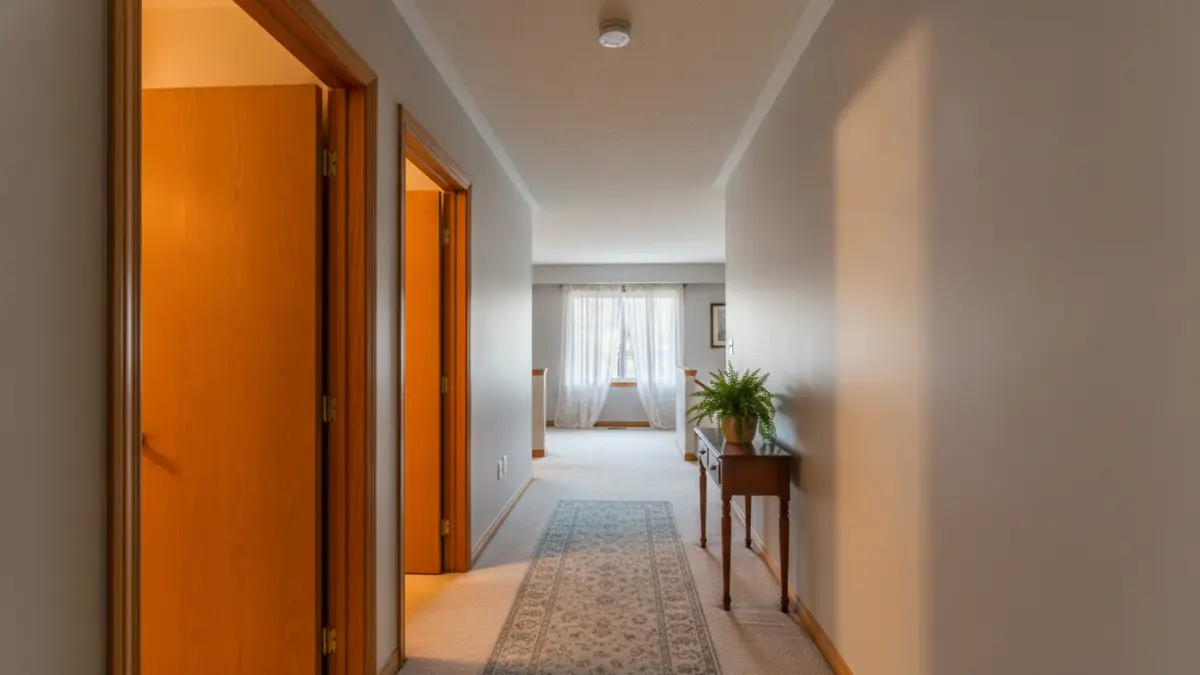
“Adjacent to each sleeping area” generally means the hallway or area just outside the bedrooms. If one hallway serves several bedrooms, one alarm in that hallway is enough. In some layouts the alarm may need to go inside the sleeping area so it can be heard. The City of Toronto adds that, depending on the age of the home, smoke alarms may also be located inside each bedroom, because newer homes were built under newer Building Code rules. If your home already has alarms in bedrooms, keep them working.
Two points that often get missed:
- Replace like with like. Toronto says that when you replace a smoke alarm you must replace it with the same type: battery, electrically connected, or both. A hardwired alarm should not be swapped for a battery-only unit.
- Age matters. The Province advises replacing every smoke alarm after 10 years of use. Brampton reminds residents that this includes hardwired alarms.
Toronto Fire Services data cited by the City shows why this matters: about 60% of fires in single-family homes across the city happened in homes without a working smoke alarm. In its December 2025 “Give a Beep” campaign, the City reported 145 cases of non-working smoke alarms in homes that year, up from 118 in 2024.
Carbon monoxide alarm rules after January 1, 2026
Carbon monoxide is an invisible, odourless gas produced when fuels such as natural gas, propane, oil, gasoline or wood do not burn completely. The Province says more than 65% of CO-related injuries and deaths in Ontario happen in the home.
Which houses need CO alarms
A house needs CO alarms if it has any of the following:
- a fuel-burning appliance, such as a gas furnace, gas water heater or gas stove
- a fireplace, gas or wood
- an attached garage
- heating air supplied by a fuel-burning appliance that is not inside the home, such as a furnace in a separate utility building (added January 1, 2026)
That covers most houses in the GTA. A home that is fully electric, with no fireplace and no attached garage, is the main exception.
Where they must go
| Location | Before 2026 | From January 1, 2026 |
|---|---|---|
| Outside each sleeping area (the hallway or area next to the bedrooms) | Required | Required |
| Every storey with a sleeping area | Covered by the sleeping area rule | Required |
| Every storey without a sleeping area, such as a main floor with only a kitchen and living room | Not required | Required |
| Homes heated by air from a fuel-burning appliance outside the home | Not listed as a trigger | Now a trigger for the rules |
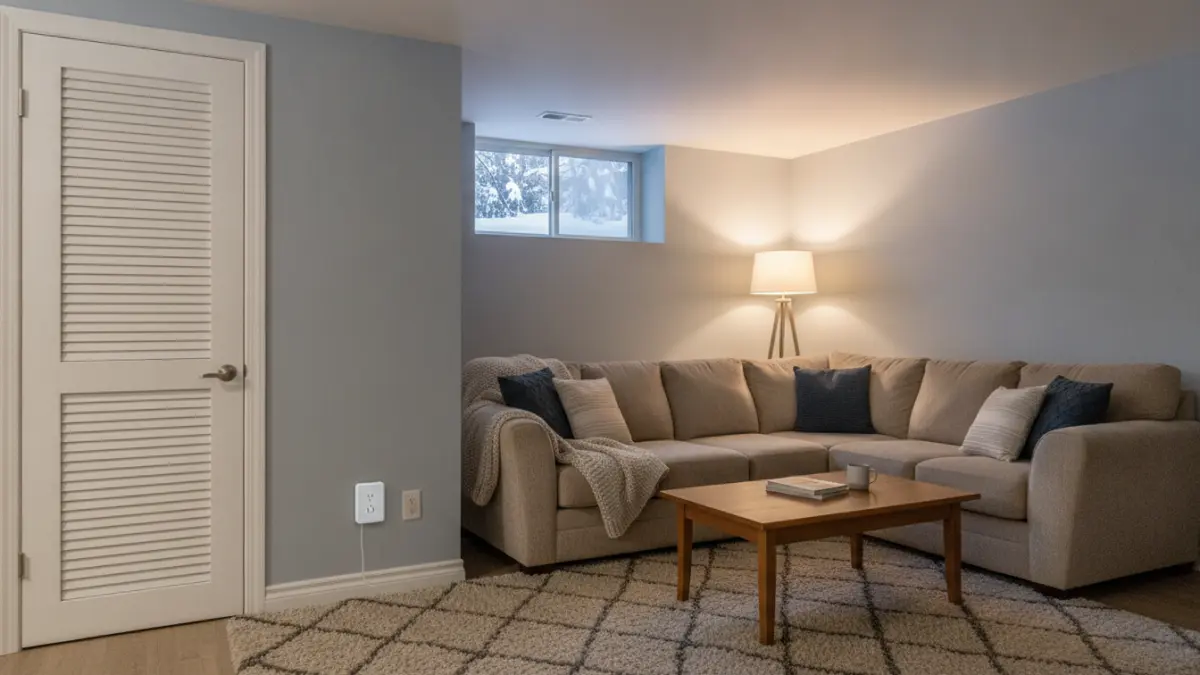
In a typical two-storey house with bedrooms upstairs and a gas furnace in the basement, that means at least one CO alarm in the upstairs hallway outside the bedrooms, one on the main floor and one in the basement, if the basement counts as a storey of the home. The provincial fact sheet does not define “storey” or say how to treat a basement, so check with your local fire department if you are unsure. Brampton Fire gives one practical example: if someone sleeps in the basement and someone sleeps upstairs, you need two CO alarms for the sleeping areas alone.
Condos and apartments
The rules for apartment and condo units depend on what is in or near the unit. A CO alarm is required in the unit if any of these apply:
- the unit has a fuel-burning appliance or a fireplace
- the building has a service room with a fuel-burning appliance, and the unit is directly above, below or beside it
- the building has a garage, and the unit is directly above, below or beside it
- the unit is heated by air from a fuel-burning appliance outside the unit, such as a central furnace in a service room (added January 1, 2026)
Where an alarm is required, it goes outside each sleeping area and, since 2026, on every storey of the unit, which matters in two-storey lofts and stacked townhouses. Building owners also have duties in common areas, including CO alarms in public corridors that are heated by air from a fuel-burning appliance. The Province’s guidebook says the owner of a condo unit is responsible for installing and maintaining the alarms in the unit, although in some buildings the condominium corporation takes this on by agreement with the owner. If you are not sure who looks after yours, ask your property manager.
Who is responsible: owners, landlords, tenants
| Who | What they must do |
|---|---|
| Homeowner living in the home | Install and maintain the required smoke and CO alarms in working order |
| Landlord (long-term or short-term rental, a room, a suite or a whole house) | Install alarms where the Fire Code requires them; keep them working, including primary and backup power; test them at the required times; give tenants the manufacturer’s maintenance instructions; replace alarms per the manufacturer or when the end-of-life warning sounds |
| Tenant | Do not remove batteries, unplug, take down or tamper with an alarm; tell the landlord as soon as an alarm is missing, disconnected or not working; let the landlord in for testing and maintenance |
| Condo unit owner | Install and maintain alarms in the unit, unless the condominium corporation has taken this on by agreement |
| Building owner (apartments and condo buildings) | Comply with requirements for service rooms and public corridors, as well as the suites |
Landlord testing schedule
The Province’s rental home guidance sets out when landlords must test smoke and CO alarms with the test button:
- at least once every 12 months
- after every change in occupancy, whatever the length of the stay
- after replacing the battery in a battery-operated alarm
- after any change to the electrical circuit that serves a hardwired alarm
The Fire Code also requires written records of this testing and maintenance, which the fire department can ask to see. Keep a simple log with the date, the alarms tested and the result. If you rent out a basement suite, our guide to renting out a basement in Toronto covers the wider fire separation and Building Code rules for second units. In Brampton, landlords who get a Residential Rental Licence can receive a free battery-operated smoke alarm from Brampton Fire; see our Brampton rental licence guide.
Short-term rentals are covered too. The Province says an owner renting out a room, suite or whole home for short stays is a landlord under the Fire Code, with the same alarm and record-keeping duties.
Penalties
Alarm offences are prosecuted under the Fire Protection and Prevention Act, 1997. The City of Toronto lists maximum penalties of $50,000 and/or one year in jail for an individual, and $500,000 for a corporation. The Province says anyone found disabling an alarm can receive a ticket for $360 or be fined up to $50,000, and Brampton Fire says tenants found disabling an alarm will be charged a minimum of $360 per device.
These penalties are not theoretical. In an August 11, 2026 release, the City of Brampton reported that the owner of a Brampton house where a 2023 fire killed two people was convicted on seven charges, including smoke and CO alarm offences. The sentence included 135 days in custody for the alarm offences, $50,000 in fines plus $10,000 in victim surcharges, and two years of probation. The City said the home had been converted from a registered two-unit house to four units without permits.
Choosing, placing and maintaining alarms
What to buy
- Certification. Look for the mark of a recognized testing agency such as CSA, ULC or Intertek (ETL).
- Power. CO alarms can be hardwired, battery-operated or plug-in. Smoke alarms can run on batteries, household power or both. If an alarm runs on household power, make sure it has a battery backup for power outages.
- Combination units. Many devices combine a smoke alarm and a CO alarm. They are allowed, and they make it easier to cover every storey. Mount a combination unit on the ceiling so the smoke sensor works properly.
- Smoke alarm type. The Province explains that ionization alarms often respond faster to flaming fires and photo-electric alarms may detect smouldering fires sooner. Photo-electric alarms near kitchens are less likely to react to cooking smoke.
Where to put them
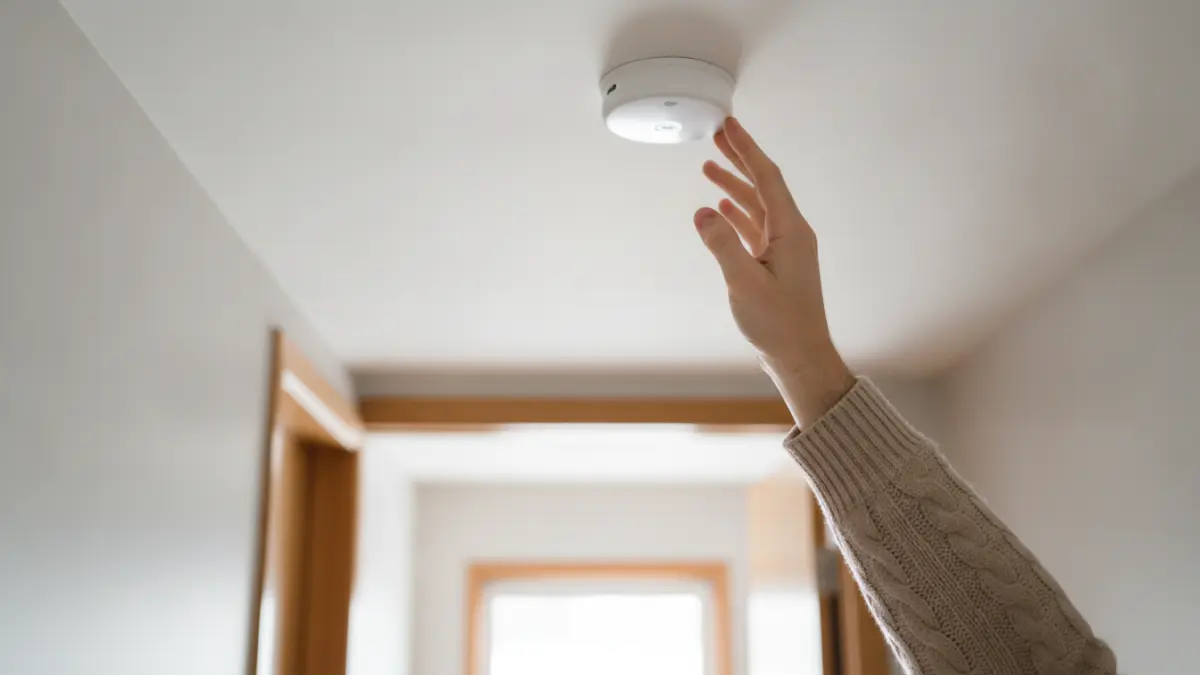
- Smoke alarms go on the ceiling, or high on a wall if a ceiling is not possible.
- Mississauga Fire advises keeping smoke alarms at least three metres from cooking appliances and away from bathrooms, heating appliances, windows and ceiling fans.
- CO alarms follow the manufacturer’s placement instructions. Brampton notes that CO mixes evenly with air, so a CO-only alarm can be installed at any height, as long as it can be heard.
Keeping them working
| Task | How often |
|---|---|
| Press the test button on every smoke and CO alarm | Every month |
| Replace batteries (unless the alarm has a sealed 10-year battery) | At least once a year, and right away when the low-battery chirp starts. Toronto suggests twice a year when the clocks change |
| Vacuum dust from the outside vents (turn the power off first for hardwired units) | Once or twice a year |
| Replace smoke alarms | After 10 years |
| Replace CO alarms | By the manufacturer’s date or when the end-of-life warning sounds. Brampton says older models usually last 5 to 7 years and newer ones about 10 |
| Have fuel-burning appliances, chimneys and vents inspected | Every year before cold weather, by a registered contractor |
Learn the sounds. A CO alarm sounds different from a smoke alarm, and both have separate low-battery and end-of-life warnings. Check the manual so everyone in the home can tell them apart.
If an alarm goes off
- Smoke alarm: get everyone out and call 911 from outside.
- CO alarm, with symptoms: if anyone has headaches, nausea, dizziness, confusion or drowsiness, get everyone outside immediately and call 911 from outside the building.
- CO alarm, no symptoms: the City of Toronto suggests checking whether the alarm is signalling a low battery or end of life before calling 911. If it is a true alarm, leave and call.
For a nuisance smoke alarm from cooking or shower steam, use the hush or pause button, or move the alarm a little further away. Never take the battery out.
Who to call in Toronto, Mississauga and Brampton
Each city’s fire service enforces the Ontario Fire Code locally. For an emergency, always call 911.
| City | Questions or a landlord who will not install working alarms | Notes |
|---|---|---|
| Toronto | Call 311 for a referral to Toronto Fire Services; a fire inspector will attend | The City’s smoke and CO pages link the provincial fact sheets for houses, multi-unit buildings and care occupancies |
| Mississauga | Mississauga Fire and Emergency Services, Fire Prevention and Risk Reduction Division, 905-456-5700 (non-emergency), listed for questions about the 2026 CO rules | The City says landlords are responsible for installing and replacing required CO alarms |
| Brampton | Brampton Fire and Emergency Services, through bramptonfire.com or 311 | Landlords with a Residential Rental Licence can get a free battery-operated smoke alarm |
Alarm problems often travel with other rental issues. Our guides to landlord heat rules and when a landlord can enter your unit cover two that come up in winter, including the notice a landlord needs to give before coming in to test alarms.
Buying, selling or renting out a home
Alarms are cheap compared with almost anything else in a home sale, but they are easy to overlook in the rush to closing. A few checks help:
- On the first walk-through, count smoke and CO alarms by floor. With the 2026 rule, a house with a gas furnace and no CO alarm on the main floor or in the basement is short.
- Check the date printed on the back of each alarm, or ask the seller. Old units still beep when tested but may be past their life.
- Ask about hardwired alarms. If the house has interconnected hardwired alarms, replacements need to be the same type.
- Look at the fuel-burning appliances. Ask when the furnace, water heater and fireplace were last serviced. Our winter home inspection guide covers furnaces, vents and CO checks during an inspection.
- Finished basements and second units need special attention. A basement bedroom is a sleeping area that needs its own alarms. See our guide to buying a house with a finished basement.
- Buying with tenants in place? As the new owner you become the landlord, with all the testing and record duties. Ask the seller for the alarm log. Our guide to buying a home with tenants in place covers the rest of the handover.
- On moving day, test every alarm and replace batteries before the first night in the house.
This article is general information, not legal advice. For how the Fire Code applies to a specific home, contact your local fire department.
Shopping for a home this winter? We can help you plan the right questions and inspections before you make an offer. Start your home search or browse homes in Toronto, Mississauga and Brampton. Thinking of selling? Get a free home evaluation.
FAQ
Do I need a carbon monoxide alarm on every floor in Ontario?
Yes, if your home has a fuel-burning appliance, a fireplace or an attached garage, or is heated by air from a fuel-burning appliance outside the home. Since January 1, 2026, the Ontario Fire Code requires CO alarms on every storey of these homes, including storeys with no bedrooms, plus one outside each sleeping area.
Who is responsible for smoke and CO alarms in a rental?
The landlord. Landlords must install the required alarms, keep them working, test them at least once a year, after a change of tenant, after a battery change and after electrical changes, and give tenants the maintenance instructions. Tenants must not disable alarms and must tell the landlord when one is not working.
What is the fine for not having a working smoke alarm?
Under the Fire Protection and Prevention Act, the City of Toronto lists maximum penalties of $50,000 and/or one year in jail for an individual and $500,000 for a corporation. The Province says anyone found disabling an alarm can receive a $360 ticket or a fine of up to $50,000.
Can I use a combination smoke and CO alarm?
Yes. Combination units are allowed and can cover both requirements in one device. Mount them on the ceiling so the smoke sensor works properly, and buy units with a CSA, ULC or Intertek (ETL) mark.
How often should smoke and CO alarms be replaced?
The Province advises replacing smoke alarms after 10 years. Replace CO alarms according to the manufacturer’s instructions or when the end-of-life warning sounds. Brampton Fire says older CO models usually last 5 to 7 years and newer ones about 10.
Does a condo unit need a CO alarm?
It does if the unit has a fuel-burning appliance or fireplace, sits directly above, below or beside a service room or garage, or is heated by air from a fuel-burning appliance outside the unit. The owner of the unit is usually responsible, unless the condominium corporation has taken on that job by agreement.
Sources
- Province of Ontario, Carbon monoxide safety, checked November 22, 2026.
- Office of the Fire Marshal, Carbon Monoxide Alarm Rules: Existing Homes, fact sheet, December 2025.
- Province of Ontario, Fire Safety Guidebook: Smoke alarm information, and Rental home fire safety, checked November 22, 2026.
- City of Toronto, Smoke Alarms, modified February 13, 2026.
- City of Toronto, Carbon Monoxide Alarms, modified January 5, 2026.
- City of Toronto, news release, City of Toronto asks residents to Give a Beep about smoke alarms, December 1, 2025.
- City of Mississauga, Fire safety at home, modified January 21, 2026.
- City of Mississauga, Carbon monoxide alarms save lives. Make sure you have one in your condo or apartment, February 4, 2026.
- City of Brampton, Fire FAQ, Fire-safe Student Living and Carbon Monoxide Awareness pages, checked November 22, 2026.
- City of Brampton, news release on smoke alarm responsibilities and the Residential Rental Licensing program, August 11, 2026.
Images: AI-generated illustrations created for this guide. They do not show real properties.
Local Toronto, HomeLife Landmark Realty Inc., Brokerage.