Verified November 24, 2026 against City of Toronto, City of Mississauga, City of Brampton, Region of Peel and Government of Ontario pages. Phone numbers and service rules change, so confirm with your city before you act.
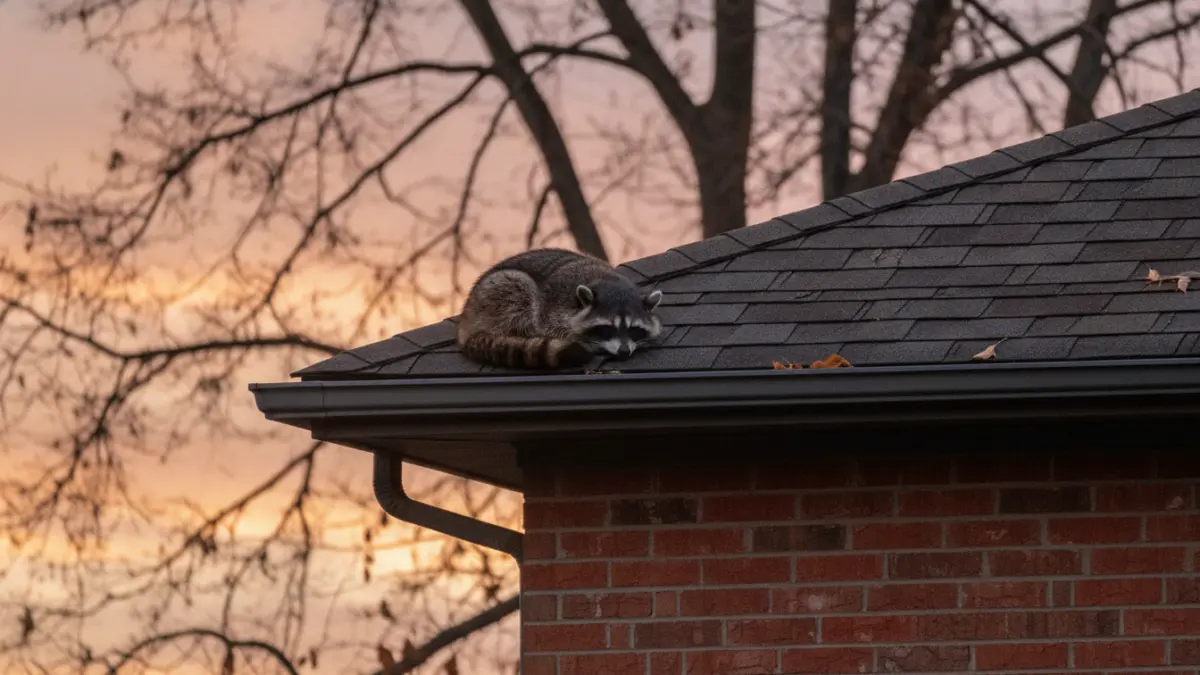
Short answer: In Toronto, Mississauga and Brampton, the City will not remove a healthy raccoon, skunk or squirrel from your attic, deck or yard. That is the property owner’s job, done yourself within Ontario’s rules or through a wildlife removal company. Animal Services will come for wildlife that is sick, injured, orphaned or in distress. Rats and mice are not a wildlife call at all: owners must keep their property free of them, landlords must deal with them in rentals, and Toronto adds a stricter pest by-law on May 1, 2027.
This question comes up most in late fall. Raccoons and squirrels look for warm, dry places to spend the winter, and rats and mice move closer to buildings as the weather turns. The first call many people make is to 311, only to learn that the City does not remove animals from private homes. Here is how responsibility is split, what the law lets you do, and who to call in each situation.
Who handles what in Toronto, Mississauga and Brampton
The pattern is the same in all three cities. Animal Services deals with animals in trouble. Property owners deal with healthy animals and pests on their own land. Property standards officers step in when an owner or landlord lets a pest problem go.
| Situation | Toronto | Mississauga | Brampton |
|---|---|---|---|
| Sick, injured, orphaned or distressed wildlife | Toronto Animal Services through 311 | Mississauga Animal Services, 905-896-5858 or 311, 24/7 | Brampton Animal Services, 905-458-5800 |
| Healthy raccoon, skunk or squirrel living on your property | Owner, or a wildlife agent the owner hires | Owner; the City suggests a wildlife removal company as a last resort | Owner; the City points to a licensed wildlife removal company |
| Healthy wild animal that wandered into the house | Owner | Owner | Owner; the City advises opening doors and windows so it can leave |
| Rats or mice in a house you own | Owner; hire a pest control company if needed | Owner | Owner; the City refers residents to the Region of Peel’s rat prevention advice |
| Rats, mice or insects in a rental unit | Landlord first, then 311 if not fixed | Landlord first, then 311 | Landlord first, then 311 |
| Someone feeding wildlife | 311 (Animals By-law) | Animal Services (Animal Care and Control By-law) | Brampton Animal Services |
Toronto Animal Services says plainly that it responds only to sick, injured or distressed wildlife and stray domestic animals, and asks people not to report common pests such as rats or mice. Mississauga and Brampton say the same about healthy wildlife: they do not trap or relocate it.
Ontario’s rules for removing wildlife from your property
Removing wildlife is governed by the province, not the city. Under Ontario’s Fish and Wildlife Conservation Act, a property owner does not need a permit to scare away, capture and release, or as a last resort kill most wild animals that are damaging or about to damage their property. Simply seeing an animal in your yard does not count as damage.
The province expects you to remove what attracted the animal first: unsecured garbage, bird seed, fallen fruit, water sources and openings under decks. If you or someone acting for you does capture an animal, these rules apply:
| Rule | What it means in practice |
|---|---|
| Release within 1 kilometre | The animal knows its food and den sites and does not have to fight for new territory. Driving a raccoon to a ravine across the city is not allowed. |
| Release within 24 hours | A caught animal cannot be held in a trap overnight and forgotten. Check traps often. |
| Private land only with permission | You cannot release on a neighbour’s property without the owner’s consent. |
| No more than necessary | Only the animals needed to protect your property. |
| Humane treatment | No unnecessary suffering. Toronto warns that body-gripping traps or poison can lead to criminal or provincial charges. |
| Your property only | Activity must stay on your own land. |
| Dens | Do not destroy the den of a furbearing mammal without ministry approval. Fox and skunk dens are exempt from that approval rule. |
| Municipal by-laws still apply | For example, firing a gun is illegal in Toronto. |
Not everyone can act for you. The province lists who may be a wildlife agent: a licensed trapper, a person employed by a municipality to control wildlife, an immediate family member, someone with a valid Outdoors Card and hunter accreditation (to harass or kill, not capture), someone authorized by the ministry, or a person who runs a wildlife removal business. That last group may capture and release only, not kill. An agent can act only when the landowner asks.
Toronto adds two practical warnings. Toronto Animal Services staff are not licensed trappers and do not lend or rent traps. And trapping often does not fix the problem: if one animal found a way in, another will follow, and trapping a mother can leave young behind to starve.
When Animal Services will come
All three cities respond when wildlife is sick, injured, orphaned or in clear distress. Brampton also lists an immediate public safety concern, or a possible rabies exposure such as a bite or scratch to a person or pet.
Signs that a raccoon may be sick, according to Toronto and Mississauga, include wandering as if blind or confused, discharge around the eyes and nose, coughing, tremors or seizures, lying or sleeping out in the open, and approaching people or pets as if tame. Toronto notes that canine distemper is usually behind this behaviour. It does not threaten people, but unvaccinated dogs can catch it.
A raccoon out in daylight is not automatically sick. Toronto points out that raccoons can be active by day in breeding season or when flushed from hiding, and they do not truly hibernate, so you may see them on mild winter days.
For baby animals, the advice is to wait. Mississauga suggests leaving young wildlife alone and calling if the mother has not returned after 24 hours, unless the baby is visibly hurt.
Raccoons in the attic, skunks under the deck
Most wildlife calls in fall are not emergencies. A raccoon has moved into an attic, a chimney or a shed, or a skunk is living under a deck. The cities recommend humane eviction before anything else.
Toronto’s four steps
- Confirm the entry is in use. Sprinkle flour at the opening and look for tracks, or stuff a rag or ball of paper in it and see if it gets pushed out.
- Make the space unpleasant. Bright light, a loud talk radio station and vinegar-soaked rags. Never try to smoke animals out of a chimney.
- Check that every animal has left. This matters most from March to July, when there may be babies. An animal sealed inside will die in the wall or attic.
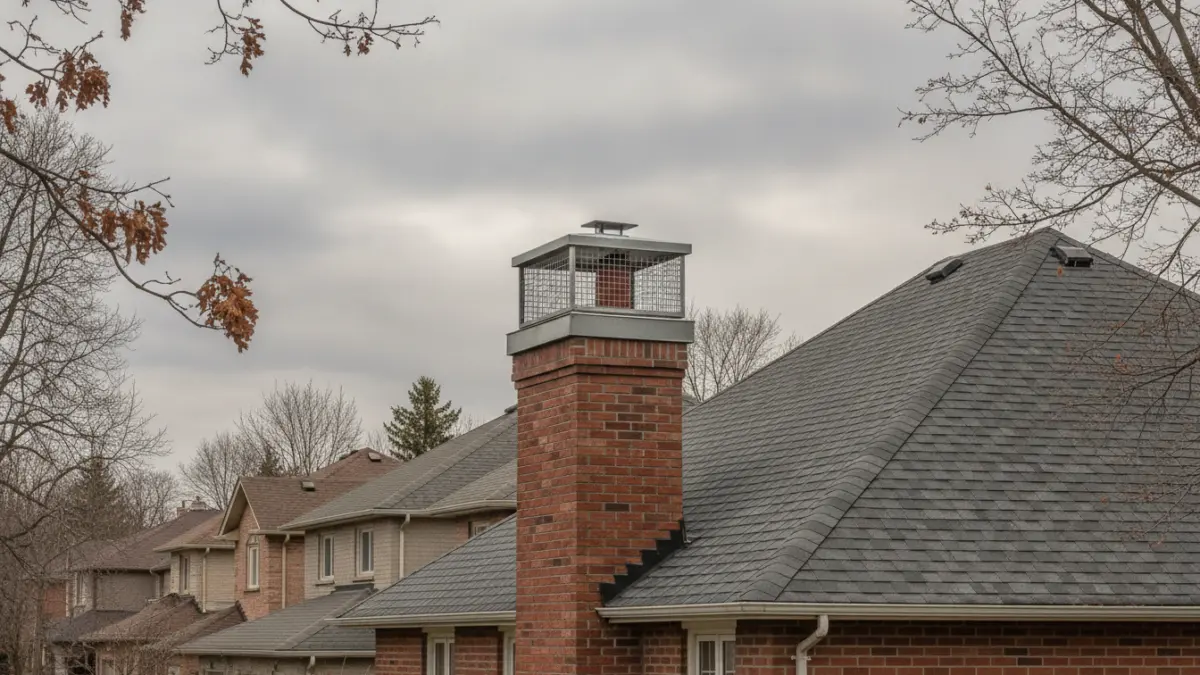
- Seal it properly. Galvanized sheet metal over holes, heavy rust-proof screening over vents, a secure chimney cap, repaired siding and trimmed overhanging branches.
Mississauga gives similar advice: keep a bright light near the den and leave deck lights on for three days and nights in a row. If the animals still do not leave, the City says you may call a wildlife removal company of your choice as a last resort.
Hiring a wildlife removal company
Brampton licenses wildlife removal businesses and publishes a searchable list of licensed companies on its Licensing pages, updated weekly. Toronto and Mississauga do not publish a similar list. Wherever you live, ask the company how it will handle the animal under the provincial rules, whether it checks for young before sealing an opening, and whether exclusion work such as one-way doors and permanent repairs is included in the price. Get the scope in writing.
Rats and mice: owner and landlord duties
Rats and mice are treated as pests, not wildlife, and the rules are different. There is no City removal service for them on private property.
Toronto. The Property Standards By-law (Chapter 629, Section 9) requires every property to be kept free of pests, including rodents and insects, whether it is owner-occupied or rented. The City’s rat control page says owners and businesses are responsible for rats on their own land and suggests a licensed pest control company if prevention is not enough. Toronto also has a Rat Response Plan with a dedicated coordination team, targeted inspections in areas with more rat activity and rules for City construction sites.
Mississauga. Under the Property Standards By-law, buildings must be kept free of debris to prevent pest infestations such as insects and rodents. Tenants in larger apartment buildings (two or more storeys with six or more units) are covered by the City’s Rental Standards Program, which requires landlords to inspect pest infestation service requests within 72 hours.
Brampton. Brampton notes that the brown (Norway) rat is the most common rat in Southern Ontario and that the roof rat is more likely to be found in roofs and eaves. It refers residents to the Region of Peel’s rat prevention advice.
Rats often move between yards, so one clean property can still see activity if neighbours store garbage or wood piles badly. Toronto says the same in its plan: treating rats is a shared job across neighbouring properties.
If you rent, tell your landlord in writing first. If nothing happens within a reasonable time, call 311 in any of the three cities. In Toronto, apartment buildings fall under RentSafeTO, and landlords must take measures to eliminate pests and post their pest management plans for tenants. Our guides to when a landlord can enter your unit and landlord heat rules cover the notice and repair side of the same relationship.
Toronto’s new pest by-law starts May 1, 2027
Toronto Council enacted By-law 1513-2025 on December 17, 2025. It creates a new Municipal Code Chapter 611, Pest Management on Private Property, which comes into force on May 1, 2027, at the same time as a rewritten Property Standards chapter. It applies to owners, operators and occupants of private land, and it goes further than the current rules:
| Chapter 611 requirement | Who it applies to |
|---|---|
| Keep the property free of infestation, defined as one or more bedbugs, a multitude of other insects, or any mammal or bird identified as a pest | Owners, operators and occupants |
| Keep the property free of conditions that encourage pests: standing water, uncontained food or organic waste, and unsealed doors, windows, walls and other entry points | Owners, operators and occupants |
| Inspect for pests within 72 hours of being made aware of them, prevent spread, and act right away to eliminate them using lawful methods | Owners and operators |
| Keep records of tenant pest requests, inspections and treatments, including the name of the licensed exterminator, for at least 24 months | Owners and operators of tenanted properties |
| Do not hide pests or block lawful pest control | Everyone |
| Fines up to $100,000 per offence, plus up to $10,000 a day for a continuing offence | Anyone convicted, including directors of a corporation |
For small landlords, the record-keeping rule is the biggest change. Someone renting out a basement apartment in Toronto will need to keep a paper trail of every pest complaint and every visit from a licensed exterminator. If you run a secondary suite, our guide to renting out a basement in Toronto covers the other rules that apply.
Feeding wildlife is banned in all three cities
Feeding is the single biggest reason wildlife keeps coming back to one street.
- Toronto: under the Animals Bylaw (Chapter 349), you may not feed wildlife or leave food out to attract animals on public or private property. Songbird feeders on your own property are allowed if they are kept clean and do not attract other wildlife.
- Mississauga: feeding wildlife is prohibited under the Animal Care and Control By-law.
- Brampton: intentionally feeding wildlife is prohibited under municipal by-law, and the City says each identified occurrence can bring a separate fine. You can report a neighbour who is feeding wildlife to Brampton Animal Services.
None of the three cities publishes a set fine amount for feeding on these pages, so we have not listed one.
Dead animals on your property
In Toronto, you can ask 311 to pick up larger dead animals such as raccoons and skunks, including on private property, and Toronto Animal Services may take up to five business days to respond. Small animals such as squirrels, mice, rats and small birds are not picked up: double-bag them and put them out with regular garbage, never in the Blue Bin or Green Bin. You can also bring a carcass to a Toronto Animal Services shelter.
In Peel, the Region’s waste sorter tells Brampton and Mississauga residents to call 311 about dead animals. On private property, it advises avoiding contact. If you must move one, wear gloves, double-bag it, tie the bag, wash your hands and keep it out of recycling and organics. You can also hire a private business or a pest control company.
Prevention checklist before winter
The cheapest wildlife problem is the one that never moves in. This list combines the City of Toronto’s raccoon and rat advice with the provincial prevention steps:
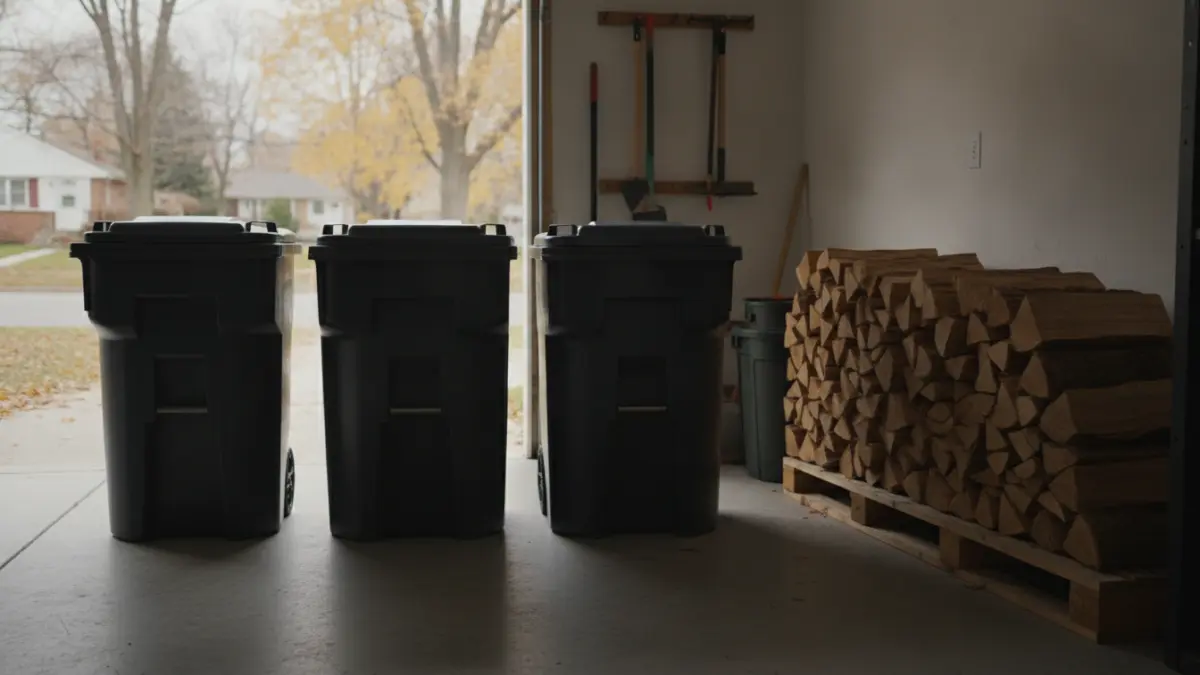
- Store garbage in containers with tight lids, and keep the Green Bin in a garage or shed until collection day if you can.
- Put waste out in the morning rather than overnight where your schedule allows.
- Do not leave pet food outside, and clean up fallen fruit, spilled bird seed and grass seed.
- Cap the chimney and cover roof and dryer vents with heavy, rust-proof screening.
- Check soffits, eaves, loose shingles and the gaps around pipes and cables where they enter the house.
- Seal cracks and small holes around the foundation, garage and shed.
- Close off the space under decks, porches and sheds once you are sure nothing is living there.
- Remove wood piles, construction debris and unused equipment that give rats shelter.
- Trim tree branches that hang over the roof.
- In Toronto, keep grass and weeds under 20 centimetres, which is also a by-law requirement.
A lot of this overlaps with the fall maintenance you already do. Our guide to trimming a neighbour’s overhanging branches explains what you can cut from your side of the line.
Buying, selling or renting out a home
Wildlife and rodent damage is easy to miss on a showing and expensive to fix later. If you are buying a home, ask your inspector to look in the attic for droppings, torn insulation, chewed wiring and daylight at the soffits or roof vents, and to check for burrows along the foundation. A winter inspection has its own limits, which we cover in buying a home in winter: inspection tips.
Homes that back onto a ravine or conservation land see more wildlife, which is normal and not a defect. Our guide to buying next to conservation land covers what else changes on those lots.
If you are selling, receipts for completed exclusion work, chimney caps and pest treatments are useful to share with buyers. Check with your insurer before assuming that damage caused by animals is covered, since policies differ. If you are planning a sale and want to know what your home could list for, a free home evaluation is a good place to start.
Looking in Toronto, Mississauga or Brampton? See current listings and local market notes on our Toronto, Mississauga and Brampton pages.
FAQ
Will the City remove a raccoon from my attic?
No. Toronto, Mississauga and Brampton do not remove or relocate healthy wildlife from private property. You can encourage it to leave and then seal the entry, or hire a wildlife removal company. Call Animal Services only if the animal is sick, injured, orphaned or in distress.
Can I trap a raccoon and drive it to a park?
Not far away. Ontario’s rules require you to release captured wildlife within 1 kilometre of where it was caught and within 24 hours, and only on private land with the owner’s permission. Relocating it across the city is not allowed.
Who do I call about rats in Toronto?
In a home you own, rats are your responsibility, and the City suggests a licensed pest control company if prevention does not work. Tenants should report rats to the landlord in writing first and call 311 if the problem is not fixed. Toronto Animal Services does not take rat or mouse reports.
Does my landlord have to deal with mice?
Yes. In Toronto and Mississauga, property standards rules require rental properties to be kept free of pests, and the landlord is responsible. From May 1, 2027, Toronto landlords must also inspect within 72 hours of being told about pests and keep pest records for at least 24 months.
Is it illegal to feed raccoons or squirrels?
Yes, in all three cities. Toronto’s Animals Bylaw bans feeding wildlife on public and private property, Mississauga’s Animal Care and Control By-law prohibits it, and Brampton says each occurrence can lead to a separate fine. Toronto allows clean songbird feeders that do not attract other wildlife.
What should I do if a skunk sprays my dog?
Keep your dog away from the skunk and check for bites or scratches. Mississauga publishes a home mix of four cups of 3% hydrogen peroxide, a quarter cup of baking soda and one tablespoon of liquid dish soap. Call your vet if you are worried, and call Animal Services if the skunk seems sick or bit your pet.
Sources
- Government of Ontario, Harass, capture or kill a wild animal damaging private property (Fish and Wildlife Conservation Act, 1997), accessed November 24, 2026.
- City of Toronto, Wildlife Trapping, modified May 14, 2026; Raccoons, modified September 17, 2026; Feeding Wildlife, modified June 15, 2026; Animal enforcement assistance page.
- City of Toronto, Rat Control, modified September 3, 2026; Housing property standards (Chapter 629); RentSafeTO building owner requirements.
- City of Toronto, By-law 1513-2025, Chapter 611 Pest Management on Private Property, enacted December 17, 2025, in force May 1, 2027.
- City of Mississauga, Raccoons, Skunks and Protect your home from wildlife pages; Animal Services news releases; Property standards page; Apartment Building Owner’s Quick Reference Guide, January 2026.
- City of Brampton, Wildlife in the City; Do Not Feed Wildlife; Rats; Licensed Wildlife Removal, accessed November 24, 2026.
- Region of Peel, Waste Sorter: dead animals; Rat prevention, accessed November 24, 2026.
This guide is general information, not legal advice. For a dispute with a landlord or neighbour, check the current by-law or speak with a lawyer or paralegal.
Images: AI-generated illustrations created for this guide. They do not show real properties.
Local Toronto, HomeLife Landmark Realty Inc., Brokerage.